
Introduction
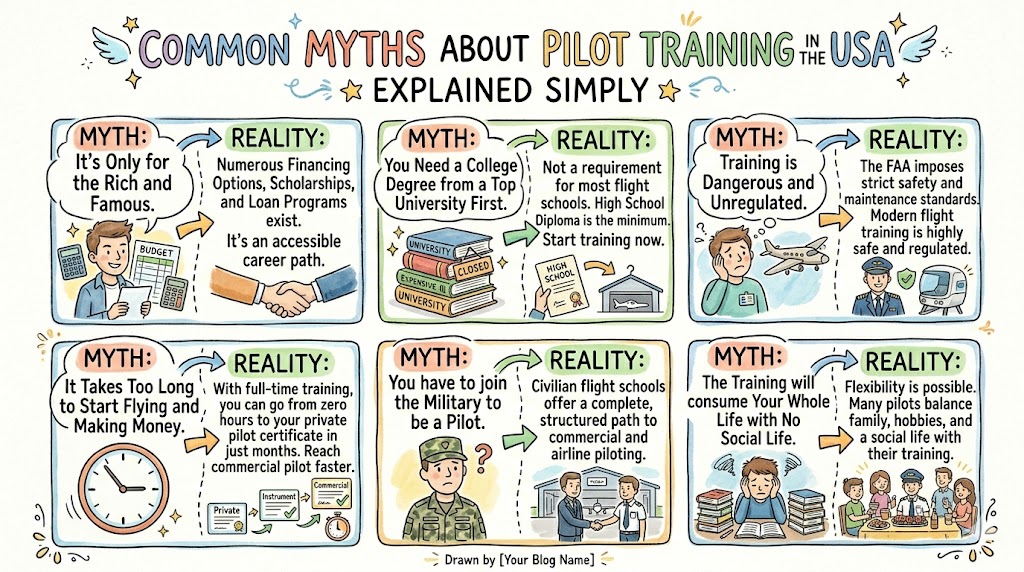
Pilot training in the USA is one of the most respected and structured pathways in aviation, attracting students from all over the world. However, many aspiring pilots hesitate to start because of widespread misconceptions about cost, difficulty, eligibility, and career opportunities. These myths often create confusion and discourage people from pursuing a rewarding aviation career.
In reality, the FAA training system is designed to be accessible, structured, and achievable with the right guidance. Whether you are a high school student, career changer, or aviation enthusiast, understanding the truth behind these myths can help you make confident and informed decisions. This blog breaks down the most common myths about pilot training in simple terms and explains what the real journey looks like.
Real-world Use Cases
Pilot training in the USA serves a wide range of individuals:
- Students aiming for airline pilot careers
- Career changers moving into aviation later in life
- International students training under FAA programs
- Hobby pilots learning for personal flying
- Military aspirants preparing for aviation roles
- Commercial pilots building flight hours for airlines
These real-world pathways show that pilot training is not limited to a single group—it is flexible and widely accessible.
Evaluation Criteria for Understanding Pilot Training Truths
To separate myths from reality, consider:
- FAA regulations and licensing structure
- Flight school types (Part 61 vs Part 141)
- Actual training costs and financing options
- Medical and eligibility requirements
- Career progression paths
- Flight hour requirements
- Job market expectations
Myth 1: Pilot Training in the USA Is Extremely Expensive for Everyone
Many assume aviation training is unaffordable.
Reality: While training can be costly, there are flexible payment plans, scholarships, and varied school options. Costs depend on aircraft type, school structure, and training pace.
Myth 2: You Must Be a Math Genius to Become a Pilot
This myth discourages many beginners.
Reality: Basic math skills are enough. Modern aircraft systems and calculators handle most complex calculations.
Myth 3: Only Military Background Students Become Pilots
Some believe aviation careers are limited to ex-military personnel.
Reality: The majority of commercial pilots in the USA come from civilian flight schools, not military backgrounds.
Myth 4: It Takes 10+ Years to Become a Pilot
There is a belief that aviation training is extremely long.
Reality: A private pilot license can take months, and commercial pilot training typically takes 1.5 to 3 years depending on pace.
Myth 5: Getting a Pilot License Guarantees a Job Immediately
Many think certification leads directly to airline employment.
Reality: A license is the first step. Pilots must build flight hours and experience before qualifying for airline jobs.
Myth 6: Only Rich People Can Become Pilots
This is one of the most common misconceptions.
Reality: Aviation is expensive but accessible through loans, structured training programs, and modular learning paths.
Myth 7: You Cannot Become a Pilot If You Wear Glasses
Vision requirements are often misunderstood.
Reality: Corrected vision (glasses or contacts) is fully acceptable under FAA medical standards.
Myth 8: Weather Stops All Flight Training
Many assume training halts frequently due to weather.
Reality: While weather affects flying, ground school, simulators, and planning continue regardless of conditions.
Myth 9: FAA Licensing Is Extremely Difficult
This myth intimidates beginners.
Reality: FAA exams are structured, standardized, and manageable with proper training and preparation.
Myth 10: All Flight Schools in the USA Are the Same
Students often believe training quality does not vary.
Reality: Flight schools differ significantly in aircraft quality, instructor experience, scheduling flexibility, and career support.
Tips for Aspiring Pilots
- Choose between Part 61 and Part 141 schools based on your goals
- Compare total training costs, not just hourly rates
- Visit schools before enrolling
- Speak with current students and instructors
- Focus on long-term career pathways, not just licensing
Part 61 vs Part 141 Training (Quick Comparison)
- Part 61: Flexible scheduling, self-paced learning, ideal for working students
- Part 141: Structured curriculum, faster progression, FAA-approved training plans
Both pathways lead to the same FAA licenses—the difference is in structure and pace.
FAQs
1- How much does pilot training cost in the USA?
Costs vary widely depending on school type, aircraft, and location. Financing options and scholarships are often available.
2- How long does it take to become a pilot?
A private pilot license may take a few months, while commercial training can take 1.5 to 3 years depending on consistency.
3- Do I need perfect vision to become a pilot?
No. Corrected vision with glasses or contact lenses is acceptable under FAA medical rules.
4- Is pilot training very difficult?
It requires dedication, but structured training makes it manageable for most students.
5- Do pilots need strong math skills?
Basic arithmetic and problem-solving are enough for most flight operations.
6- Can international students train in the USA?
Yes. Many FAA-approved schools accept international students.
7- Do all pilots come from the military?
No. Most pilots in the USA are trained through civilian flight schools.
8- Is a pilot license enough to get a job?
A license is only the first step; pilots must build flight hours for airline eligibility.
9- Does bad weather stop training completely?
No. Ground school and simulator training continue even when flying is not possible.
10- Are all flight schools the same?
No. Schools vary in quality, aircraft availability, cost, and training structure.
Conclusion
Pilot training in the USA is often surrounded by myths that make the journey seem more difficult, expensive, or limited than it actually is. In reality, the FAA training system is flexible, structured, and accessible to a wide range of students. While aviation requires commitment and discipline, it is far from impossible or restricted to a select group of people. By understanding the truth behind these misconceptions, aspiring pilots can make informed decisions, choose the right training path, and confidently pursue a career in aviation. With the right guidance and mindset, becoming a pilot in the USA is an achievable and rewarding goal.
