
Introduction
Starting flight training is one of the most exciting steps toward becoming a pilot. Whether your goal is to fly for recreation, pursue a professional aviation career, or eventually become an airline pilot, proper preparation can make a significant difference in your training experience.
Many first-time aviation students enter flight school with enthusiasm but little understanding of what lies ahead. Flight training involves much more than learning how to operate an aircraft. Students must understand regulations, prepare financially, develop effective study habits, maintain medical fitness, and become familiar with aviation terminology and procedures.
Having a structured flight training checklist helps eliminate uncertainty and allows students to focus on learning. It ensures that important requirements are completed before training begins and helps students build confidence from their very first lesson.
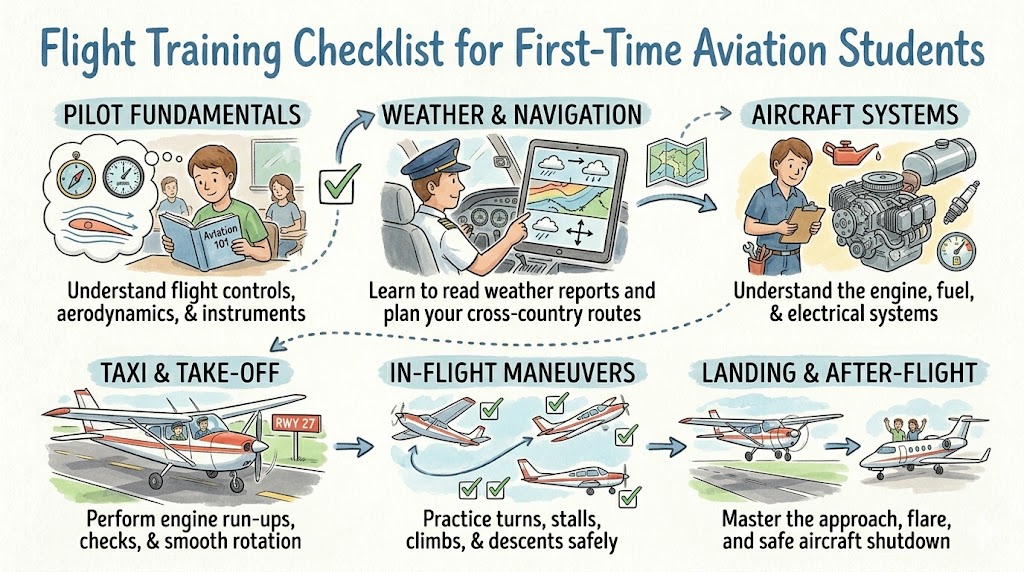
This guide provides a complete flight training checklist for first-time aviation students and explains how to prepare for a successful journey into aviation.
Why Preparation Matters Before Flight Training
Flight training is a major commitment of time, effort, and financial resources. Proper preparation provides several benefits:
- Reduces stress during the early stages of training.
- Helps students avoid common mistakes.
- Improves learning efficiency.
- Creates realistic expectations.
- Increases confidence during flight lessons.
- Supports long-term training success.
Students who begin training with a clear plan often progress more efficiently than those who start without preparation.
Complete Flight Training Checklist for First-Time Aviation Students
1. Confirm Basic Eligibility Requirements
Before enrolling in a flight school, ensure you meet the basic requirements.
Typical Requirements
- Meet minimum age requirements.
- Read, speak, write, and understand English.
- Possess a valid government-issued identification.
- Be medically fit for flight training.
- Demonstrate commitment to learning and safety.
While educational requirements vary among schools, strong communication and problem-solving skills are valuable assets in aviation.
2. Obtain an FAA Medical Certificate
A medical certificate is often one of the first requirements for aspiring pilots.
Why It Is Important
The medical examination confirms that you are physically capable of safely operating an aircraft.
Types of Medical Certificates
First-Class Medical
Typically required for airline transport pilots.
Second-Class Medical
Often used by commercial pilots.
Third-Class Medical
Commonly used by student and private pilots.
Preparation Tips
- Schedule your examination early.
- Bring identification and medical history documentation.
- Discuss any health concerns honestly with the examiner.
- Avoid delaying medical certification until after training begins.
Obtaining medical clearance early helps prevent unexpected obstacles later.
3. Research and Select the Right Flight School
Choosing the right flight school is one of the most important decisions a future pilot can make.
Factors to Consider
Training Programs
Determine whether the school offers programs aligned with your goals.
Instructor Experience
Qualified instructors contribute significantly to student success.
Aircraft Availability
A larger fleet often means fewer scheduling delays.
Safety Record
Research the school’s safety culture and maintenance standards.
Student Support
Look for schools that provide mentoring, career guidance, and academic assistance.
Part 61 vs Part 141 Training
| Feature | Part 61 | Part 141 |
|---|---|---|
| Flexibility | High | Structured |
| Schedule | Flexible | Fixed |
| Pace | Student-directed | Curriculum-driven |
| Best For | Working adults | Full-time students |
Both pathways can produce excellent pilots when chosen appropriately.
4. Understand Your Flight Training Path
Understanding the progression of pilot certifications helps students set realistic goals.
Private Pilot License
The first major milestone that allows individuals to fly for personal purposes.
Instrument Rating
Teaches pilots to fly safely in various weather conditions using instruments.
Commercial Pilot License
Allows pilots to receive compensation for flying services.
Certified Flight Instructor
Enables experienced pilots to teach others.
Airline Transport Pilot
Typically required for airline careers.
Understanding the complete pathway helps students plan both time and finances effectively.
5. Plan Your Budget
Flight training represents a significant investment.
Common Training Expenses
- Aircraft rental
- Instructor fees
- Ground school
- Study materials
- Medical examinations
- FAA knowledge tests
- Checkrides
- Aviation equipment
- Travel expenses
Sample Flight Training Budget
| Expense Category | Estimated Cost Range |
|---|---|
| Medical Certificate | Moderate |
| Ground School | Moderate |
| Flight Training Hours | Significant |
| Flight Instructor Fees | Significant |
| FAA Testing Fees | Moderate |
| Equipment and Supplies | Moderate |
Students should always budget additional funds for unexpected training delays or extra flight hours.
6. Gather Essential Flight Training Equipment
Having the right equipment improves both learning and safety.
Aviation Headset
One of the most important purchases for a student pilot.
Pilot Logbook
Used to record all flight training activities.
Flight Bag
Keeps training materials organized.
Kneeboard
Useful for note-taking during flight operations.
Aviation Charts
Essential for navigation training.
Flight Computer
Helps perform flight calculations.
Tablet and Aviation Apps
Many students use tablets for flight planning and training resources.
Sunglasses
Help reduce glare and improve visibility.
Student Pilot Equipment Checklist
| Item | Essential |
|---|---|
| Headset | Yes |
| Logbook | Yes |
| Flight Bag | Yes |
| Kneeboard | Recommended |
| Charts | Yes |
| Tablet | Recommended |
| Sunglasses | Recommended |
7. Complete Ground School Preparation
Ground school provides the theoretical knowledge required for safe flight operations.
Topics Covered
- Aerodynamics
- Aircraft systems
- Aviation regulations
- Weather theory
- Navigation
- Flight planning
- Human factors
- Emergency procedures
Students who invest time in ground school often perform better during flight lessons.
8. Learn Basic Aviation Terminology
Aviation has its own language. Understanding common terms improves communication and learning.
Important Terms
ATC
Air Traffic Control.
Taxiway
The path used by aircraft to move on the ground.
Runway
The designated surface for takeoff and landing.
VFR
Visual Flight Rules.
IFR
Instrument Flight Rules.
METAR
A standardized aviation weather report.
NOTAM
Notice containing important operational information.
Crosswind
Wind blowing across the runway.
Familiarity with these terms helps students feel more comfortable during training.
9. Prepare Physically and Mentally
Flight training demands concentration and decision-making.
Physical Preparation
- Maintain healthy sleep habits.
- Stay hydrated.
- Exercise regularly.
- Follow medical guidance.
Mental Preparation
- Develop discipline.
- Stay patient during challenges.
- Accept mistakes as part of learning.
- Maintain a positive mindset.
A healthy pilot is generally a safer and more effective pilot.
10. Create a Study Plan
Consistent studying leads to better retention and stronger performance.
Weekly Study Strategy
Daily Review
Spend time reviewing notes after every lesson.
Knowledge Reinforcement
Read training materials regularly.
Practice Tests
Use practice exams to identify weak areas.
Goal Tracking
Set measurable learning goals each week.
Students who maintain consistent study habits typically progress faster through training.
11. Understand Student Pilot Requirements
Before solo flight, students must complete specific requirements.
Common Requirements
- Student pilot certification.
- Medical certification.
- Instructor endorsement.
- Demonstrated proficiency.
- Knowledge of regulations and procedures.
Meeting these requirements prepares students for independent flight operations.
12. Familiarize Yourself with Airport Operations
Airports are busy environments that require situational awareness.
Areas to Learn
Ramp Area
Where aircraft are parked and serviced.
Taxiways
Ground movement routes.
Runways
Takeoff and landing areas.
Control Tower
Coordinates airport traffic.
Fixed Base Operators
Provide fuel, maintenance, and pilot services.
Understanding airport operations reduces confusion during early training.
Common Mistakes First-Time Aviation Students Should Avoid
Choosing a School Based Only on Price
The cheapest option may not provide the best training experience.
Flying Infrequently
Long gaps between lessons often increase training time and costs.
Ignoring Ground School
Flight skills improve significantly when supported by strong theoretical knowledge.
Poor Time Management
Balancing training, work, and personal responsibilities requires planning.
Underestimating Costs
Unexpected expenses can affect training continuity.
Not Asking Questions
Flight instructors expect students to ask questions and seek clarification.
What to Expect During Your First Flight Lesson
Most first lessons follow a structured format.
Preflight Briefing
The instructor explains lesson objectives and safety procedures.
Aircraft Inspection
Students learn how to inspect the aircraft before flight.
Cockpit Familiarization
Introduction to instruments and controls.
Taxi Procedures
Basic ground movement operations.
Basic Flight Maneuvers
Students may practice climbs, turns, descents, and straight-and-level flight.
Post-Flight Debrief
The instructor reviews strengths and areas for improvement.
Most students find their first flight lesson exciting, educational, and highly motivating.
First Month Flight Training Action Plan
Week 1
- Select a flight school.
- Obtain medical certification.
- Purchase training materials.
Week 2
- Begin ground school.
- Learn aviation terminology.
- Attend introductory flight lessons.
Week 3
- Continue flight lessons.
- Review regulations and weather concepts.
- Practice communication procedures.
Week 4
- Evaluate progress.
- Meet with instructors.
- Update training goals.
- Prepare for advanced lessons.
Following a structured plan helps students stay organized and focused.
Expert Tips for Flight Training Success
Stay Consistent
Regular lessons improve skill retention.
Focus on Safety
Safety should always remain the top priority.
Build Good Habits Early
Develop professional habits from the beginning.
Learn From Mistakes
Every mistake presents an opportunity to improve.
Trust the Process
Progress may not always feel immediate, but consistent effort produces results.
Maintain Motivation
Remember your long-term aviation goals during challenging periods.
Frequently Asked Questions
1- What should I bring to my first flight lesson?
Bring identification, a notebook, comfortable clothing, sunglasses, and any training materials provided by your school. Many students eventually purchase a headset, but some schools provide one initially.
2- Do I need prior aviation experience?
No. Most flight schools are designed specifically for beginners with no aviation background.
3- How long does it take to earn a Private Pilot License?
Training duration varies based on schedule, weather, and individual progress. Consistent training generally helps students complete requirements more efficiently.
4- Is flight training difficult?
Flight training is challenging but manageable with dedication, study, and regular practice.
5- What medical certificate do I need?
Most student pilots begin with a Third-Class Medical Certificate, though requirements may vary depending on training goals.
6- How much should I budget for flight training?
Costs vary significantly depending on location, aircraft type, training pace, and school selection.
7- How often should I fly during training?
Many instructors recommend multiple lessons per week to maintain proficiency and momentum.
8- Can I work while attending flight school?
Yes. Many students successfully balance employment with flight training through proper scheduling.
9- What is the biggest mistake student pilots make?
Inconsistent training schedules often slow progress and increase overall training costs.
10- What qualities make a successful pilot?
Discipline, attention to detail, communication skills, adaptability, and a strong commitment to safety are among the most important qualities.
Conclusion
Beginning flight training is an exciting step toward achieving your aviation goals. Success starts long before your first lesson by preparing financially, mentally, academically, and physically. By following a structured flight training checklist, first-time aviation students can avoid common mistakes, reduce stress, and build a strong foundation for future success. From obtaining medical certification and choosing the right flight school to mastering aviation terminology and creating effective study habits, every preparation step contributes to a smoother learning experience. Flight training requires commitment and patience, but with proper planning and consistent effort, students can confidently navigate their journey from beginner to licensed pilot. The more prepared you are on day one, the greater your chances of becoming a safe, skilled, and successful aviator.
