
Introduction
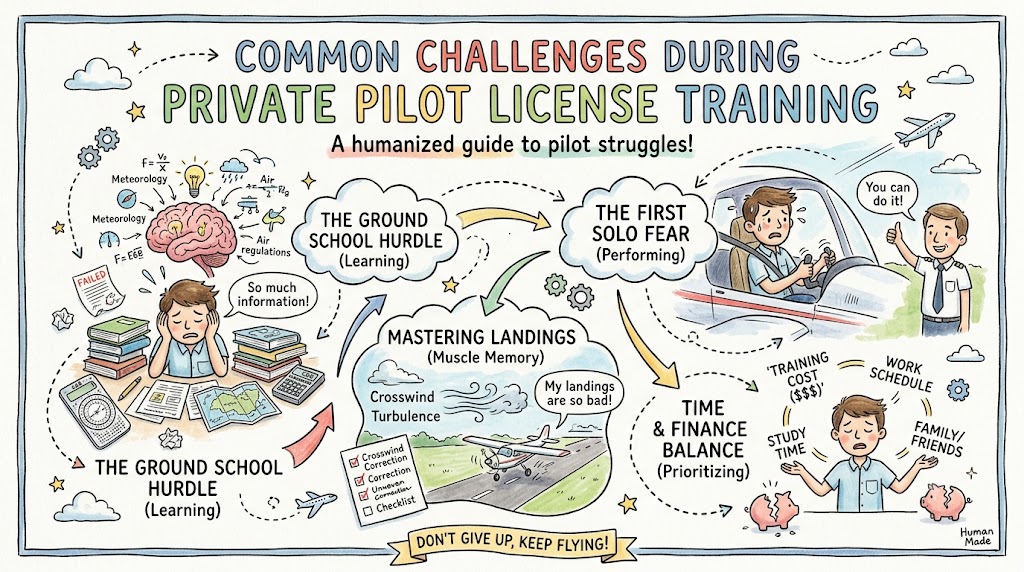
Becoming a pilot is a major achievement, but earning a Private Pilot License (PPL) is a demanding process that requires discipline, patience, and strong commitment. While many students enter flight training with excitement, they quickly realize that the journey involves both academic and practical challenges.
From understanding complex aviation theory to managing weather-related delays and financial pressure, every stage of PPL training tests a student’s ability to adapt and stay consistent.
This blog explains the most common challenges during Private Pilot License training and how aspiring pilots can overcome them successfully.
What is Private Pilot License Training?
Private Pilot License training is the first certification step for anyone who wants to become a pilot. It allows a person to operate an aircraft independently under visual flight rules.
PPL training includes:
- Ground school (aviation theory subjects)
- Flight training with certified instructors
- Simulator practice sessions
- Solo flying practice
- Written and practical examinations
Students develop essential skills such as navigation, communication, aircraft control, and flight safety procedures.
Common Challenges During Private Pilot License Training
1. Understanding Aviation Theory
Aviation theory includes subjects like meteorology, navigation, air regulations, and aircraft systems. These subjects are often new and complex for beginners.
Students commonly struggle with:
- Technical terminology
- Complex calculations
- Memorizing aviation rules and procedures
Consistent study and practical application help overcome this challenge.
2. Weather-Related Flight Delays
Weather conditions directly impact flight training schedules. Poor visibility, wind, or storms can delay or cancel training flights.
This results in:
- Irregular training schedules
- Delays in completing flight hours
- Reduced learning continuity
Patience and flexibility are essential during training.
3. Financial Pressure
PPL training is a significant investment. Costs can increase due to:
- Additional flight hours required
- Fuel price variations
- Examination and licensing fees
Many students underestimate the total cost, leading to financial stress during training.
4. Time Management Challenges
Balancing ground school, flight lessons, and personal responsibilities can be difficult.
Common issues include:
- Missed study sessions
- Irregular flying practice
- Poor exam preparation scheduling
Proper planning and discipline are necessary for success.
5. Communication with Air Traffic Control
Radio communication with ATC is one of the most challenging parts for beginners.
Students often face difficulties such as:
- Using correct aviation phraseology
- Responding quickly under pressure
- Understanding instructions accurately
Regular practice improves confidence and clarity.
6. Developing Flight Handling Skills
Flying an aircraft requires coordination, precision, and decision-making skills.
Beginners often struggle with:
- Maintaining altitude and direction
- Smooth takeoffs and landings
- Coordinating multiple controls simultaneously
These skills improve gradually with consistent flight hours.
7. Exam Pressure
PPL training includes written exams and practical flight tests. Students often experience pressure due to strict evaluation standards.
This can lead to:
- Anxiety before exams
- Overthinking during flight tests
- Fear of failure
Proper preparation reduces stress and improves performance.
8. Confidence Building During Solo Flights
The first solo flight is a major milestone but also a stressful experience.
Students may feel:
- Nervousness about flying alone
- Fear of making mistakes
- Pressure to perform perfectly
Instructor guidance and repeated practice help build confidence.
9. Transition from Ground School to Flight Training
Moving from classroom theory to real flight operations can be challenging.
Students often find:
- Theory easier than practical application
- Real-time decision-making difficult
- Increased responsibility in the cockpit
This transition requires time and experience.
10. Maintaining Consistency and Motivation
Flight training requires long-term commitment. Many students struggle to stay consistent due to delays or challenges.
Common issues include:
- Loss of motivation during delays
- Interrupted training schedules
- Mental fatigue
Staying focused on the end goal is essential for success.
FAQs
1. What is the biggest challenge in Private Pilot License training?
The biggest challenge is balancing theoretical knowledge with practical flight training while maintaining consistency and discipline throughout the course.
2. Is PPL training difficult for beginners?
Yes, it can be challenging initially due to complex aviation theory and the practical demands of flying an aircraft.
3. How long does it take to complete PPL training?
The duration depends on weather conditions, student performance, and training schedule, but it typically takes several months.
4. Why does weather affect flight training?
Weather impacts visibility, wind conditions, and safety, which can lead to flight delays or cancellations.
5. Is pilot training expensive?
Yes, PPL training requires a significant financial investment, including flight hours, exams, and training resources.
6. How can students improve ATC communication skills?
Regular practice, simulator training, and listening to real aviation communications help improve ATC communication skills.
7. What subjects are covered in ground school?
Ground school includes meteorology, navigation, air regulations, aircraft systems, and human performance.
8. Why is solo flight training stressful?
Solo flights can be stressful because students fly without instructor assistance for the first time, requiring confidence and responsibility.
9. How can students stay motivated during training?
Setting clear goals, maintaining discipline, and focusing on long-term aviation career benefits help maintain motivation.
10. What is the key to success in PPL training?
Consistency, patience, strong theoretical knowledge, and regular practice are the key factors for success in pilot training.
Conclusion
Private Pilot License training is a rewarding journey, but it requires dedication and resilience. Challenges such as weather delays, financial pressure, technical theory, communication skills, and confidence building are all part of the learning process. These challenges are not barriers but stepping stones toward becoming a skilled and confident pilot. With proper preparation, discipline, and guidance, every student can successfully complete their training.At FlightTrainingUS.com, aspiring pilots can find the support and direction needed to navigate their aviation journey with confidence and success.
