
Introduction
Have you ever dreamed of becoming a pilot? Aviation offers an exciting path for people who enjoy learning, technology, and travel. However, becoming a pilot takes planning, training, and commitment.
The United States offers several pathways for learning to fly. Students can begin with basic flight lessons and work toward advanced pilot certificates. They can also explore different aviation careers along the way.
But where should a beginner start? Which flight school should they choose? What certificates do they need? How much time and money should they plan for?
This Complete FlightTrainingUS Guide for Future Aviation Students answers these important questions. It explains the main training pathways, school options, eligibility requirements, costs, and career choices.
Whether you are a high school student, college student, or international applicant, this guide can help you understand your next steps.
1. Why Consider Flight Training in the United States?
The United States has a large aviation training network. It includes independent flight schools, university aviation programs, and professional pilot academies.
Students can explore different training structures and aircraft. They can also choose programs based on their goals, schedule, and budget.
Here are some reasons students consider US flight training:
- Different training pathways: Students can explore Part 61 and Part 141 programs.
- Various aircraft options: Schools may offer different aircraft for basic and advanced training.
- Structured learning: Many schools combine ground lessons with practical flight instruction.
- Multiple certificates: Students can work toward private, commercial, and other pilot qualifications.
- Career preparation: Some programs include academic courses and professional development.
- International learning environment: Some schools welcome eligible students from other countries.
The right school depends on the student’s needs. A popular location or large campus does not automatically make a program the best choice.
2. Understand the Main Pilot Training Pathways
Pilot training usually involves several certificates and ratings. Each one provides different privileges and requires specific training.
A certificate establishes a pilot’s qualification. A rating adds permission or qualification for a particular aircraft or type of operation.
A. Private Pilot Certificate (PPL)
The Private Pilot Certificate is a common starting point for airplane pilots.
It teaches students the basic knowledge and skills needed to operate an aircraft under the applicable rules.
Training usually includes:
- Basic aircraft controls.
- Flight planning.
- Aviation weather.
- Navigation.
- Aircraft systems.
- Aviation regulations.
- Radio communication.
- Flight safety and decision-making.
Students complete ground study and practical flight lessons. They must also pass the required knowledge and practical tests.
A private pilot can generally fly for personal purposes. However, this certificate does not normally authorize flying passengers or property for compensation or hire.
Who should consider it?
Students who want to learn to fly and build a foundation in aviation can explore this pathway.
B. Instrument Rating (IR)
An Instrument Rating provides additional qualifications for flying under instrument flight rules, subject to the applicable requirements.
Pilots learn to use aircraft instruments and follow instrument procedures. They also develop a better understanding of weather and navigation.
Training may cover:
- Instrument flight principles.
- Instrument approaches.
- Navigation systems.
- Flight planning.
- Weather interpretation.
- Communication with air traffic control.
- Instrument procedures and regulations.
This rating is an important step for many pilots who want to pursue professional aviation.
C. Commercial Pilot Certificate (CPL)
The Commercial Pilot Certificate provides additional privileges for certain professional flying activities.
It requires more advanced knowledge and experience than a private pilot certificate.
Training and testing cover areas such as:
- Aircraft performance.
- Advanced flight maneuvers.
- Navigation.
- Flight planning.
- Aeronautical decision-making.
- Commercial operating rules.
- Aircraft-specific knowledge.
A commercial certificate does not automatically qualify someone for every professional flying job. Employers may require additional experience, ratings, medical qualifications, or training.
D. Multi-Engine Rating
Some pilots choose to qualify on aircraft with more than one engine.
Multi-engine training introduces additional aircraft systems and performance considerations.
Students may study:
- Multi-engine aircraft systems.
- Engine performance.
- Aircraft handling characteristics.
- Flight planning.
- Applicable operating procedures.
- Aircraft-specific limitations.
This rating may support later career goals. However, the exact requirements depend on the aircraft category and rating sought.
E. Airline Transport Pilot (ATP) Certificate
The Airline Transport Pilot Certificate is an advanced pilot qualification used for certain airline operations.
It involves substantial experience and additional training.
The pathway may include:
- Required flight experience.
- Knowledge testing.
- Practical testing.
- Applicable medical qualifications.
- Additional training for certain ATP applicants.
The FAA also provides an ATP Certification Training Program for applicable applicants.
Some eligible graduates of authorized aviation degree programs may qualify for a restricted-privileges ATP pathway. This has specific conditions and does not remove the need to meet the applicable requirements.
Students should review current FAA rules before choosing an airline-focused training plan.
3. Basic Eligibility Requirements for Future Aviation Students
Before starting a pilot training program, students should understand the eligibility rules.
Requirements differ by certificate and aircraft category. Some apply before solo flight, while others apply before taking a certification test.
Important areas include:
Age requirements
For an airplane student pilot certificate, the FAA requires applicants to be at least 16 years old. Different age requirements apply to other certificates and aircraft categories.
Students can take lessons with an instructor before receiving a student pilot certificate. However, they need the certificate before flying solo.
English language proficiency
Pilots must meet the applicable English language requirements.
They need to communicate clearly and understand aviation instructions. This is important for flight operations and safety.
Medical certification
Certain pilot activities require an FAA medical certificate.
The required class depends on the certificate and flying privileges. Students should understand these requirements before making a major financial commitment.
An Aviation Medical Examiner (AME) conducts the relevant medical examination.
Identification and documentation
Students may need identity documents, training records, and other application information.
International applicants may have additional requirements. They should confirm these with the school and relevant government agencies.
Important: Check the latest requirements directly with the FAA and other relevant authorities. Do not rely only on old online articles or informal advice.
4. How to Choose the Right Flight School
Choosing a flight school is one of the most important early decisions.
A school should offer suitable training, qualified instructors, well-maintained aircraft, and clear student support.
Start by comparing these factors.
Part 61 vs. Part 141 Flight Training
The FAA provides two important regulatory frameworks for many pilot training programs.
| Comparison factor | Part 61 | Part 141 |
|---|---|---|
| Training structure | More flexible training framework | FAA-approved structured school curriculum |
| Lesson planning | Can be adapted to student progress | Follows an approved training course |
| Scheduling | May offer flexible arrangements | Depends on the school’s approved program |
| Training records | Must meet applicable requirements | Uses the approved course structure and records |
| Best consideration | Personal learning needs and flexibility | Students who prefer a structured course |
Neither option is automatically better for every student.
Part 61 may suit students who need more flexibility. Part 141 may suit students who prefer a formal training structure.
Compare the actual school, instructors, aircraft, costs, and student support before deciding.
Questions to Ask a Flight School
Before enrolling, ask:
- Is the school operating under Part 61 or Part 141?
- What aircraft are available for training?
- How many instructors are available?
- What qualifications do the instructors hold?
- How does the school manage aircraft maintenance?
- What happens when weather delays lessons?
- How are student progress and training records managed?
- What costs are included in the quoted price?
- Are additional training hours billed separately?
- What support is available for international students?
A good school should explain its program and costs clearly.
5. Understanding Flight Training Costs
Flight training requires a financial plan. The total cost depends on several factors.
A student’s expenses may include:
| Expense category | What it covers |
|---|---|
| Flight instruction | Instructor time and training sessions |
| Aircraft rental | Use of the training aircraft |
| Ground school | Classroom or online learning |
| Study materials | Books, charts, and learning resources |
| Knowledge tests | Required written examinations |
| Practical tests | Certification flight tests |
| Medical examination | Applicable aviation medical assessment |
| Equipment | Headset and other required learning items |
| Additional training | Extra lessons when needed |
| Living expenses | Accommodation, meals, and transport |
There is no single price that applies to every student.
Aircraft type, location, school rates, instructor availability, weather, and student progress can all affect the total.
The FAA lists 40 flight hours as the Part 61 minimum for an airplane private pilot certificate. This includes specific instructor and solo flight requirements. However, the FAA also reports that students commonly need more time to complete the requirements.
This difference matters when preparing a budget. Students should not assume that reaching the legal minimum means they will be ready for the practical test.
How to Plan Your Training Budget
Use these steps:
- Request a written cost estimate from the school.
- Ask what the quoted price includes.
- Check aircraft and instructor rates.
- Ask about examination and testing fees.
- Plan for additional lessons.
- Include accommodation and transport costs.
- Keep an emergency financial reserve.
A realistic budget can reduce financial pressure during training.
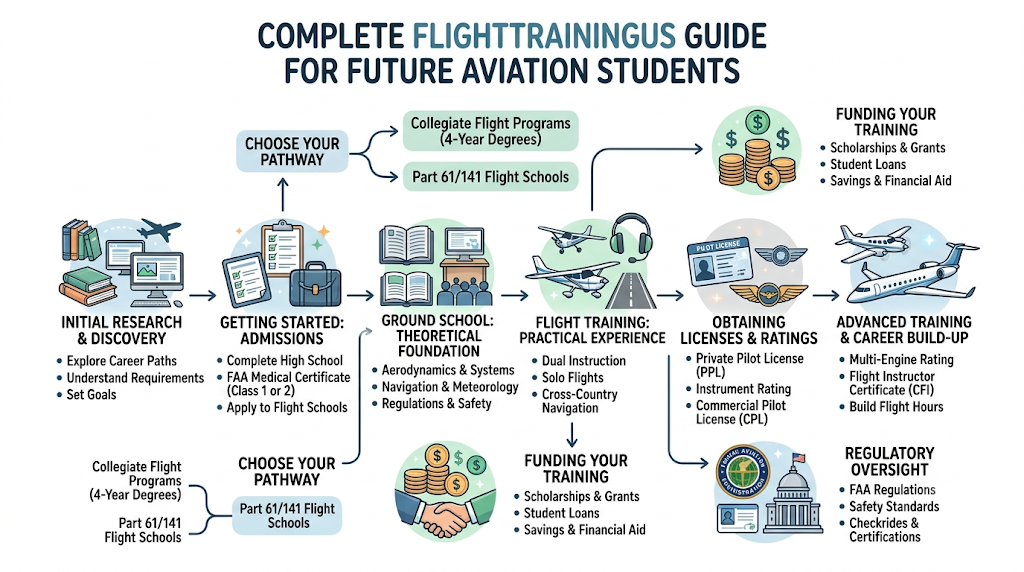
6. What Does a Typical Flight Training Journey Look Like?
Every student’s journey is different. However, many beginners follow a similar learning process.
Step 1: Research aviation careers
Learn about different pilot roles and the qualifications they require.
Decide whether you want to explore personal flying, professional aviation, or an airline career.
Step 2: Compare flight schools
Research schools and compare their training programs. Review their aircraft, instructors, costs, and location.
Step 3: Review eligibility requirements
Check age, language, medical, and documentation requirements for your intended certificate.
Step 4: Begin ground school
Study aviation subjects before and alongside practical lessons.
Ground learning helps students understand the principles behind flight operations.
Step 5: Start practical training
Students learn with a qualified instructor. They gradually develop their knowledge and skills through supervised lessons.
Step 6: Complete required training
Continue studying and completing the applicable training requirements.
Instructors assess progress and identify areas that need more practice.
Step 7: Prepare for examinations
Students prepare for the required knowledge and practical tests.
Step 8: Earn the certificate
After meeting the applicable requirements and passing the required tests, students may receive their certificate.
Step 9: Plan the next stage
Some students continue toward an instrument rating or commercial pilot certificate. Others explore different aviation education opportunities.
7. Ground School vs. Practical Flight Training
Flight training has two important learning areas: ground school and practical flight instruction.
Both help students build a strong aviation foundation.
What Is Ground School?
Ground school teaches the theory behind aviation.
Common subjects include:
- Aerodynamics.
- Aircraft systems.
- Aviation weather.
- Navigation.
- Flight planning.
- Aviation regulations.
- Radio communication.
- Aviation safety.
Students learn why aircraft behave in certain ways. They also study the rules and information needed for safe flight planning.
What Is Practical Flight Training?
Practical training gives students supervised experience in an aircraft.
It helps them connect classroom knowledge with real aviation environments.
Students learn about aircraft familiarization, communication, flight planning, and aircraft handling under instructor supervision.
The instructor provides feedback and monitors progress throughout the training process.
Neither ground school nor practical training should be treated as optional. Both contribute to pilot development.
8. Important Skills Every Future Pilot Should Develop
Becoming a pilot involves more than learning to operate an aircraft.
Students also need personal and professional skills.
Communication
Pilots communicate with instructors, other crew members, and air traffic control. Clear communication supports safe and organized operations.
Situational awareness
This means understanding what is happening around the aircraft. It includes weather, traffic, aircraft status, and changing conditions.
Decision-making
Pilots must evaluate information and make responsible decisions. Good decisions depend on knowledge, training, and sound judgment.
Time management
Flight training requires regular study and lesson preparation. Managing time can help students maintain steady progress.
Problem-solving
Aviation involves changing conditions. Students learn to understand problems and seek appropriate guidance.
Discipline and responsibility
Pilots must follow regulations, training requirements, and approved procedures. Responsibility is an important part of professional aviation.
Continuous learning
Aviation knowledge changes as technology and regulations develop. Pilots must continue learning throughout their careers.
9. Common Challenges Future Aviation Students May Face
Flight training can be rewarding, but it also requires effort.
Students should understand possible challenges before enrolling.
Managing training expenses
Aircraft rental and instruction can make training costly. A clear budget helps students plan.
Weather-related delays
Weather can affect lesson schedules. Students should understand that delays are a normal part of aviation planning.
Learning technical subjects
Aviation includes specialized terms and concepts. Regular study makes these subjects easier to understand.
Maintaining consistent progress
Long breaks between lessons may affect learning continuity. Students should discuss a realistic schedule with their school.
Preparing for examinations
Knowledge tests require preparation. Students should use approved learning materials and follow instructor guidance.
Accepting feedback
Instructors may ask students to repeat lessons or review certain topics. This is part of learning, not a sign of failure.
A patient approach and consistent study habits can support progress.
10. Aviation Career Opportunities After Training
Pilot training can open several career pathways. However, each role has different qualification and experience requirements.
Airline Pilot
Airline pilots operate passenger aircraft for scheduled airlines. These positions usually require advanced qualifications, relevant experience, and employer-specific training.
Charter Pilot
Charter pilots operate flights arranged for individual customers or organizations. Requirements depend on the operation and aircraft.
Corporate Aviation Pilot
Corporate pilots operate aircraft for businesses and private organizations.
Cargo Pilot
Cargo pilots transport goods and other approved shipments. They must meet the requirements for their aircraft and operation.
Flight Instructor
Qualified flight instructors teach students and help them develop aviation knowledge and skills.
Aerial Survey Pilot
These pilots may operate aircraft for mapping, photography, observation, and other approved survey work.
Other Aviation Careers
Students can also explore aviation-related roles outside the cockpit. These may include aviation safety, airport operations, maintenance, dispatch, and aviation management.
Completing a pilot certificate does not guarantee a job. Career planning should include experience requirements, medical qualifications, employer expectations, and the aviation job market.
11. Important Guidance for International Students
The United States attracts students from many countries. International applicants should plan their training and travel arrangements carefully.
Before choosing a school, review these areas:
Flight school selection
Confirm that the school accepts international students and can explain its enrollment process.
Immigration requirements
Visa requirements depend on the student’s circumstances and the nature of the program.
Students should confirm the correct arrangements through official US government sources and the school’s international student office.
TSA Flight Training Security Program
Certain non-US citizens and non-US nationals must complete the applicable Transportation Security Administration (TSA) Flight Training Security Program process.
The program includes a security threat assessment. Eligible candidates need a TSA Determination of Eligibility before a covered US flight training provider can provide the relevant training.
Students should review the current requirements directly through the official TSA Flight Training Security Program portal.
Medical and English requirements
International students must also meet applicable FAA medical and English language requirements.
Living expenses
Students should plan for accommodation, meals, transport, health coverage, and other personal expenses.
Important: Admission to a flight school does not automatically provide immigration permission or authorization to train. Confirm every requirement before making travel arrangements.
12. How to Prepare Before Starting Flight Training
Good preparation can make the beginning of flight training easier.
Use this checklist before enrolling.
- Research different pilot career pathways.
- Understand the certificates and ratings you may need.
- Compare Part 61 and Part 141 schools.
- Review applicable FAA eligibility requirements.
- Understand the relevant medical requirements.
- Build a realistic training budget.
- Ask schools about aircraft and instructor availability.
- Review the school’s maintenance and safety practices.
- Understand the training schedule.
- Check visa and TSA requirements if applicable.
- Discuss your goals with a qualified flight instructor.
- Set realistic study and training expectations.
This preparation can help students ask better questions and make more informed decisions.
13. How FLIGHTTRAININGUS.COM Can Support Future Aviation Students
Finding reliable aviation information is an important first step.
FLIGHTTRAININGUS.COM can serve as an educational starting point for students exploring pilot training in the United States.
Future aviation students can use aviation learning resources to understand:
- Different pilot certification pathways.
- Basic aviation terminology.
- Flight school selection factors.
- Training requirements.
- Ground school subjects.
- Aviation career options.
- Questions to ask before enrolling.
Students should always verify official requirements through the FAA, TSA, and other relevant authorities.
The goal is to help readers understand their options before making important education and career decisions.
Frequently Asked Questions
1. How do I start flight training in the United States?
Start by researching pilot career options and comparing flight schools. Review eligibility, medical requirements, training costs, and available programs before enrolling.
2. What qualifications do I need to become a pilot?
Requirements depend on the certificate. They may include minimum age, English proficiency, medical eligibility, flight experience, knowledge tests, and practical tests.
3. What is the difference between Part 61 and Part 141?
Part 61 provides a flexible training framework. Part 141 schools follow FAA-approved training courses and structured curricula. Students should compare both options against their learning needs.
4. How long does it take to earn a private pilot certificate?
The timeline depends on lesson frequency, weather, aircraft availability, student progress, and other factors. The FAA’s Part 61 minimum flight time for an airplane private pilot certificate is 40 hours, but many students need more.
5. Can international students train as pilots in the USA?
Yes, eligible international students may pursue US flight training. They must meet applicable immigration, TSA, FAA, and school requirements.
6. What medical certificate do student pilots need?
The required medical certificate depends on the intended flying privileges and activities. Students should review FAA medical requirements and consult an Aviation Medical Examiner when appropriate.
7. How much does flight training cost?
Costs vary by location, aircraft, school, instructor rates, and student progress. Request a detailed estimate directly from the flight school.
8. Can I become a commercial pilot after earning a private pilot certificate?
A private pilot certificate can be an early step toward commercial training. However, students must complete additional training, experience, and testing requirements.
9. What is the difference between a commercial pilot certificate and an ATP certificate?
A commercial pilot certificate provides certain professional flying privileges. An ATP certificate is an advanced qualification required for particular airline operations. Each has different eligibility and experience requirements.
10. What career options are available after flight training?
Qualified pilots may explore airline, charter, corporate, cargo, instruction, and specialized flying roles. Each career has its own requirements and employer expectations.
Conclusion
Starting a pilot career requires more than choosing a flight school. Students must understand training pathways, eligibility, costs, and career requirements. They should compare schools carefully and verify official information before enrolling. Regular study, responsible decisions, and consistent training support long-term progress. This Complete FlightTrainingUS Guide for Future Aviation Students provides a starting point for exploring the journey. With realistic planning and the right guidance, future students can take informed steps toward their aviation goals.
