
Introduction
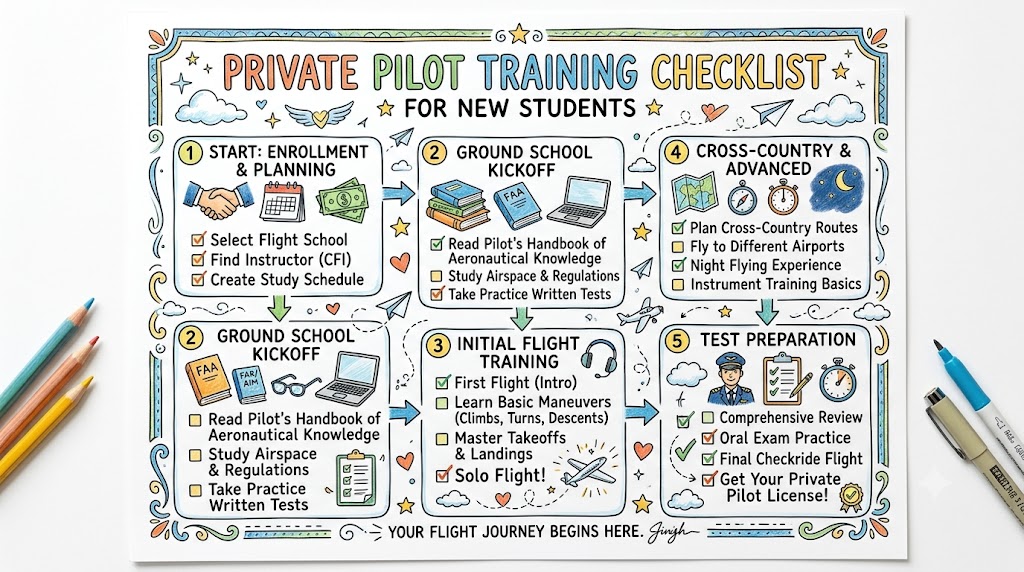
Starting private pilot training is an exciting milestone for anyone who dreams of flying an aircraft. However, for beginners, the process can feel overwhelming due to the mix of requirements, training steps, technical knowledge, and safety rules involved. A structured private pilot training checklist helps new students stay organized, understand expectations, and progress smoothly from their first lesson to becoming a licensed pilot.
Private pilot training is not just about learning to fly—it involves ground school, medical requirements, communication skills, navigation knowledge, and practical flight experience. When students follow a clear checklist, they build confidence faster, reduce mistakes, and ensure a safer and more efficient learning journey.
This guide provides a complete checklist to help new students prepare for private pilot training in a simple and structured way.
Real-world Use Cases
A beginner starting pilot training from zero experience uses the checklist to understand what steps come before their first flight lesson.
A student preparing for their first solo flight follows structured requirements to ensure they are fully ready and safe.
A career changer entering aviation uses the checklist to plan training timelines, budget, and learning milestones.
A student preparing for the FAA written exam relies on the checklist to focus on ground school subjects like weather and navigation.
A trainee struggling with navigation or landing techniques uses the checklist to identify skill gaps and improve gradually.
A parent understanding pilot training steps for their child uses the checklist to guide expectations and requirements.
A hobby learner taking weekend lessons uses it to stay consistent and track progress.
Evaluation Criteria for Private Pilot Training Readiness
Before starting or progressing in training, students should evaluate:
- Medical certificate eligibility
- Age and student pilot requirements
- Ground school enrollment status
- Financial readiness for training
- Basic aviation knowledge understanding
- Instructor and flight school selection
- Communication and ATC readiness
- Flight hour progress tracking
- Safety awareness and mindset
- Solo flight readiness level
- FAA written exam preparation
- Aircraft familiarity and comfort
These criteria help ensure students are prepared for safe and structured learning.
Medical Certificate Eligibility Requirements
Before flying solo, students must meet basic medical fitness requirements.
For example, a valid aviation medical certificate ensures the student is fit to handle flying responsibilities safely.
Age and Student Pilot Eligibility Rules
Students must meet minimum age requirements before solo flight and licensing.
For example, younger students can begin training but must meet eligibility rules before progressing.
Choosing a Certified Flight School
Selecting the right flight school is one of the most important decisions.
For example, structured programs help students progress more efficiently than unorganized training environments.
Selecting a Qualified Flight Instructor
A good instructor builds confidence and ensures proper skill development.
For example, experienced instructors help beginners correct mistakes early.
Ground School Enrollment and Preparation
Ground school teaches essential aviation theory.
For example, students learn weather, navigation, and aircraft systems before flying.
Aviation Theory Basics
Understanding theory helps students make safe decisions in the air.
For example, knowing how weather affects flight improves safety awareness.
Required Identification and Documentation
Students must provide valid identification and required documents before training.
For example, ID verification is necessary for FAA registration and records.
Flight Training Budget and Cost Planning
Pilot training requires financial preparation.
For example, understanding hourly flight costs helps students avoid unexpected expenses.
Logbook Setup and Flight Hour Tracking
A logbook records all training progress and flight hours.
For example, instructors review logbooks before approving solo flights.
Simulator or Ground Training Preparation
Simulators help students practice safely before real flights.
For example, practicing takeoffs and landings in simulation improves real-world performance.
First Flight Lesson Expectations
The first flight introduces basic aircraft control.
For example, students learn how to handle simple maneuvers under instructor guidance.
Radio Communication Basics with ATC
Students must learn standard aviation communication.
For example, clear radio calls ensure safe coordination with air traffic control.
Pre-flight Inspection Awareness
Pilots must check aircraft condition before every flight.
For example, inspecting fuel and control surfaces ensures safe operation.
Aircraft Familiarization Checklist
Understanding cockpit instruments builds confidence.
For example, knowing flight controls reduces confusion during early lessons.
Flight Training Schedule Planning
Consistency improves learning outcomes.
For example, regular lessons help students retain flying skills better.
Solo Flight Readiness Requirements
Students must demonstrate full control before flying alone.
For example, instructors assess landings and maneuvers before solo approval.
FAA Knowledge Exam Preparation
Students must pass a written theory exam.
For example, topics include navigation, weather, and aviation regulations.
Cross-country Flight Training Awareness
Students must complete longer navigation flights.
For example, flying between airports builds real-world flying experience.
Safety Mindset and Decision-making Skills
Good pilots always prioritize safety.
For example, avoiding bad weather demonstrates strong decision-making.
Emergency Procedure Awareness
Students must learn how to handle unexpected situations.
For example, simulated engine failure training builds emergency readiness.
Prepared vs Unprepared Student
| Factor | Prepared Student | Unprepared Student |
|---|---|---|
| Confidence | High | Low |
| Progress | Fast | Slow |
| Safety Awareness | Strong | Weak |
| Learning Efficiency | High | Low |
Ground School vs Flight Training
| Factor | Ground School | Flight Training |
| Focus | Theory | Practical flying |
| Learning Type | Academic | Hands-on |
| Outcome | Knowledge | Skill |
Simulator vs Real Aircraft
| Factor | Simulator | Real Aircraft |
| Safety | Very High | High |
| Cost | Lower | Higher |
| Learning Speed | Fast | Gradual |
Part 61 vs Part 141 Training
| Factor | Part 61 | Part 141 |
| Structure | Flexible | Structured |
| Pace | Student-driven | Fixed syllabus |
| Suitability | Individual learners | Career-focused students |
Student Pilot vs Licensed Pilot
| Factor | Student Pilot | Private Pilot |
| Independence | Limited | Full |
| Skill Level | Developing | Advanced |
| Responsibility | Shared | Full responsibility |
Benefits of Using a Checklist
A structured checklist helps students:
- Reduce confusion before training
- Build confidence faster
- Stay organized throughout training
- Avoid common beginner mistakes
- Improve safety awareness
- Track learning progress
- Prepare for exams effectively
- Improve communication skills
- Stay consistent in training
- Achieve licensing goals faster
Practical Tips for New Students
- Start ground school early
- Stay consistent with flight lessons
- Practice radio communication regularly
- Track all progress in logbook
- Ask instructors questions often
- Focus on safety-first mindset
- Prepare financially before training
Common Mistakes to Avoid
- Skipping ground school preparation
- Inconsistent training schedule
- Ignoring instructor feedback
- Poor logbook management
- Rushing through training stages
- Underestimating weather knowledge
FAQs
1. What is a private pilot training checklist?
It is a structured guide that helps students prepare for pilot training in an organized and safe way.
2. How do I start pilot training?
You start by selecting a flight school, meeting medical requirements, and beginning ground school.
3. Do I need a medical certificate?
Yes, a valid aviation medical certificate is required for training and solo flights.
4. How much does pilot training cost?
Costs vary depending on flight hours, aircraft type, and school location.
5. How many flight hours are required?
A minimum number of hours is required before licensing, as per aviation regulations.
6. What is ground school?
It is theoretical training covering navigation, weather, and aviation rules.
7. What is the first flight like?
It is a guided session where students learn basic aircraft control.
8. What is solo flight?
It is when a student flies an aircraft alone after instructor approval.
9. What is the FAA written exam?
It is a theory test that evaluates aviation knowledge.
10. What is the best beginner advice?
Stay consistent, follow instructions, and focus on safety and learning step by step.
Conclusion
A private pilot training checklist is essential for new students who want to start their aviation journey with confidence and clarity. It helps organize every step, from medical requirements and ground school to flight training and solo readiness. By following a structured checklist, students can reduce confusion, improve safety awareness, and progress more efficiently toward becoming licensed pilots. With proper preparation and consistency, private pilot training becomes a smooth and rewarding path into aviation.
