
Introduction
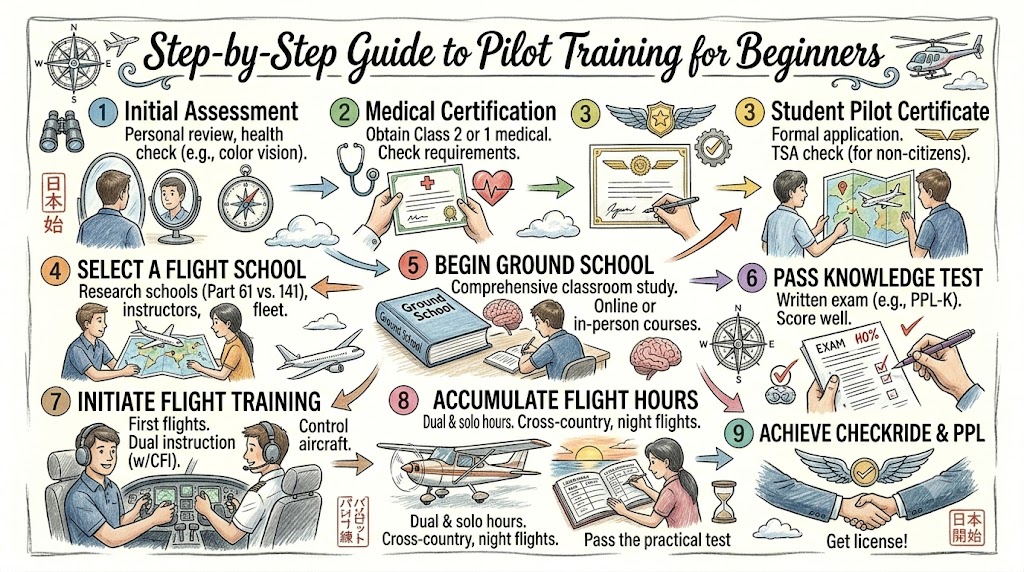
Becoming a pilot is an exciting journey that combines skill, discipline, and dedication. For beginners, understanding the full scope of pilot training is essential to navigate the process efficiently, avoid common pitfalls, and make informed decisions. Pilot training involves learning both theoretical knowledge and practical flight skills, progressing from initial lessons to solo flights and finally earning certification. By following a structured step-by-step approach, aspiring pilots can set realistic expectations, manage costs, and steadily build confidence in the cockpit.
Real-world Use Cases
Many students begin pilot training with the dream of flying commercially, as hobbyists, or as private pilots for personal travel. For instance, a high school graduate may start with a Sport Pilot license to gain basic experience before pursuing a Private Pilot Certificate. Flight schools and instructors structure training to build foundational skills, gradually increasing complexity while ensuring safety. These real-world applications highlight the importance of preparation, scheduling, and following regulatory standards to achieve a successful pilot career.
Evaluation Criteria for Aspiring Pilots
Before enrolling, beginners should assess physical health, academic readiness, financial resources, and career goals. Medical certification, availability of training facilities, instructor experience, aircraft type, and program duration are also key factors. Evaluating these criteria ensures students choose a flight school and training path that aligns with their aspirations, whether recreational or professional.
Step-by-Step Pilot Training for Beginners
1- Determine Eligibility and Prerequisites
Ensure you meet minimum age requirements (typically 16 for solo flight, 17 for private pilot license) and have a strong foundation in math, physics, and English comprehension.
2- Obtain a Medical Certificate
Schedule an FAA (or local equivalent) medical exam to verify fitness for flight. This ensures safety and compliance with regulations before starting flight lessons.
3- Choose a Flight School
Research accredited flight schools, considering factors such as instructor experience, aircraft availability, cost, and program structure. Visit campuses if possible and speak to current students for insights.
4- Begin Ground School
Learn fundamental aviation theory, including aerodynamics, navigation, meteorology, flight regulations, and aircraft systems. Ground school prepares you for both written exams and practical application in the cockpit.
5- Start Flight Lessons
Begin practical flight training with a certified instructor. Lessons cover pre-flight checks, takeoff, landing, navigation, and emergency procedures. Training typically starts in dual-control aircraft before progressing to solo practice.
6- Simulator Training
Use flight simulators to practice maneuvers, instrument navigation, and emergency scenarios safely. Simulator time enhances confidence and reduces risk before flying real aircraft.
7- Complete Solo Flights
After sufficient dual instruction and skill assessment, conduct supervised solo flights. Solo experience is critical for building independence, confidence, and proficiency in decision-making.
8- Pass Exams and Checkrides
Complete written, oral, and practical flight tests to demonstrate competency. Successfully passing these evaluations leads to earning a pilot certificate appropriate to your training path.
9- Continue Advanced Training (Optional)
Consider pursuing additional ratings such as instrument, commercial, or multi-engine certifications to expand career opportunities or flying privileges.
10- Stay Current and Maintain Proficiency
Regular practice, continued education, and recurrent training ensure skills remain sharp and compliant with aviation regulations.
Comparison of Beginner Pilot Paths
- Sport Pilot: Lower hours, minimal medical requirements, limited aircraft weight, ideal for hobbyists.
- Private Pilot: Standard starting path, broader privileges, foundation for commercial licenses.
- Recreational Pilot: Restricted area of operation, fewer requirements, suitable for local flight enthusiasts.
Practical Tips for Beginners
- Start with a clear budget and consider financing or scholarships for training.
- Maintain a study schedule for ground school to reinforce theory.
- Use flight logs to track progress, flight hours, and lessons.
- Communicate openly with instructors to address challenges or skill gaps.
- Prioritize safety and compliance over speed in training.
FAQs
1- How much does beginner pilot training cost?
Costs vary by license type, flight hours, and school, ranging from $10,000 for Sport Pilot to $50,000+ for Private Pilot training.
2- How long does pilot training take?
Depending on schedule and weather, Sport Pilot licenses may take a few months, while Private Pilot training can take 6–12 months.
3- Do I need prior flight experience?
No. Flight schools train complete beginners from ground theory to solo flight.
4- What age can I start pilot training?
Minimum age is typically 16 for solo flight and 17 for private pilot licensing.
5- Is a medical exam required?
Yes. FAA or equivalent medical certification is mandatory for safety and compliance.
6- How many flight hours are needed for a Private Pilot License?
Usually a minimum of 40–50 flight hours, including dual instruction and solo flight.
7- Can I train part-time while studying or working?
Yes. Many schools offer flexible schedules, though progress may be slower.
8- What types of aircraft will I train on?
Training is usually conducted in light single-engine aircraft, suitable for beginners.
9- Are simulators necessary?
Simulators complement flight lessons, allowing safe practice of complex maneuvers and emergencies.
10- Can this training lead to a professional pilot career?
Yes. Beginner pilot training lays the foundation for advanced ratings, commercial licenses, and airline careers.
Conclusion
Pilot training for beginners is a structured journey that combines theoretical knowledge, practical flight skills, and disciplined practice. By following a step-by-step approach—from eligibility and medical certification to solo flights and exams—students can navigate the training efficiently and safely. Choosing the right flight school, maintaining consistent study habits, and practicing regularly ensures a strong foundation for future aviation endeavors, whether recreational or professional. With preparation, dedication, and persistence, aspiring pilots can turn their dream of flight into a rewarding reality.
