
Introduction
Taking your first private pilot lesson is an exciting milestone. It marks the beginning of a journey into aviation, where you’ll learn not only how to fly an aircraft but also how to think like a pilot, make sound decisions, and operate safely in the skies. Whether your goal is to fly recreationally, travel more conveniently, or pursue a professional aviation career, the first lesson lays the foundation for everything that follows.
Many first-time student pilots feel a mix of excitement and nervousness before stepping into the cockpit. Questions like “What will happen during my first lesson?”, “Do I need any flying experience?”, and “How should I prepare?” are completely normal. Fortunately, preparing ahead of time can help you feel more confident, learn more effectively, and enjoy the experience.
This guide explains everything you need to know before your first private pilot lesson, including what to expect, what to bring, how to prepare mentally and physically, and how to make the most of your training.
Why Preparation Matters
Preparing before your first lesson allows you to focus on learning instead of worrying about the unknown.
Good preparation helps you:
- Feel more confident
- Reduce first-day anxiety
- Understand instructor guidance more easily
- Improve safety awareness
- Learn more efficiently
- Build good aviation habits from the beginning
Remember that every experienced pilot once sat in the cockpit for the very first time.
What Happens During Your First Private Pilot Lesson?
Although every flight school has its own training process, most first lessons follow a similar structure.
Meeting Your Flight Instructor
Your instructor will introduce themselves, explain the lesson objectives, and answer any initial questions.
This is also a great opportunity to discuss your aviation goals and previous experience.
Pre-Flight Briefing
Before entering the aircraft, your instructor will explain:
- Today’s lesson plan
- Safety procedures
- Weather conditions
- Basic flight concepts
- Aircraft limitations
This briefing helps you understand what to expect during the flight.
Aircraft Introduction
You’ll become familiar with the training aircraft.
Your instructor will explain:
- Aircraft controls
- Cockpit layout
- Flight instruments
- Safety equipment
- Seating position
- Communication systems
Pre-Flight Inspection
Every pilot performs a visual inspection before flying.
You’ll learn how to examine:
- Fuel
- Oil
- Tires
- Wings
- Control surfaces
- Propeller
- Lights
- Aircraft exterior
Understanding this process is an essential part of becoming a safe pilot.
Taxi and Takeoff
Once inside the aircraft, you’ll observe or assist with:
- Engine start
- Radio communication
- Taxi procedures
- Run-up checks
- Takeoff
Your instructor will handle most responsibilities while explaining each step.
Basic Flight Experience
During the flight, you may experience:
- Straight-and-level flight
- Gentle turns
- Climbs
- Descents
- Maintaining altitude
- Basic aircraft control
Many instructors also allow students to briefly handle the flight controls under supervision.
Landing and Debrief
After landing, your instructor will review:
- What you learned
- Areas that went well
- Skills to practice
- What to expect during the next lesson
The debrief is an important learning opportunity.
Learn Basic Aviation Terminology
Knowing a few aviation terms beforehand can make your first lesson much easier to follow.
Some useful terms include:
- Cockpit
- Yoke
- Rudder
- Ailerons
- Elevator
- Throttle
- Flaps
- Taxi
- Runway
- Airspeed
- Altitude
- Checklist
- Pattern
- Trim
You don’t need to memorize everything, but becoming familiar with these words builds confidence.
Get Plenty of Rest
Flying requires concentration and quick thinking.
A good night’s sleep helps improve:
- Alertness
- Learning ability
- Memory
- Decision-making
- Situational awareness
Avoid arriving tired after a long workday whenever possible.
Eat a Healthy Meal Before Flying
Many new students overlook nutrition.
Before your lesson:
- Eat a light meal
- Stay hydrated
- Avoid excessive caffeine
- Avoid alcohol
- Don’t skip breakfast or lunch
Flying on an empty stomach or after a very heavy meal may reduce comfort.
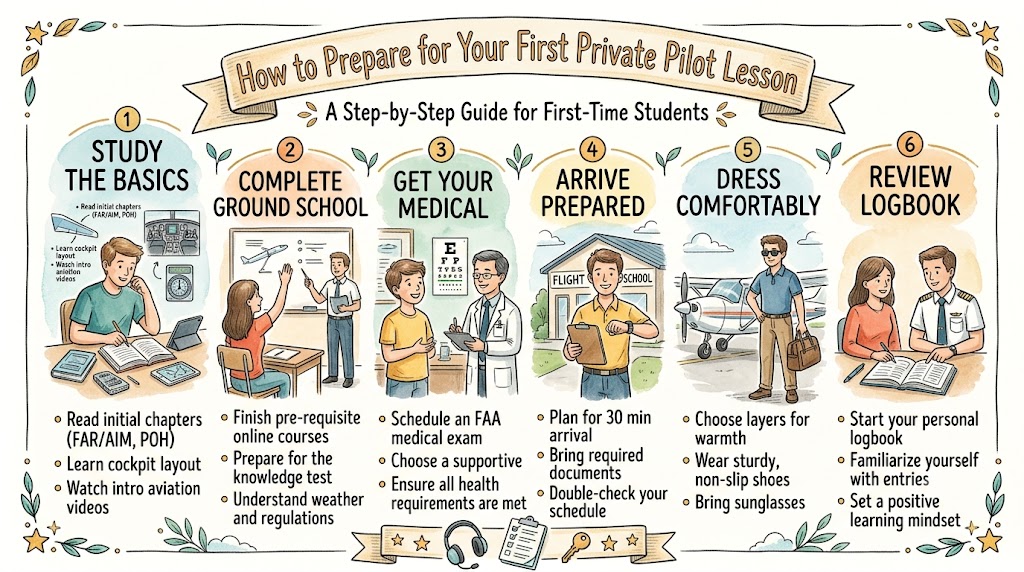
Dress Comfortably
Choose clothing that allows you to move comfortably inside the cockpit.
Recommended clothing:
- Comfortable shirt
- Long pants or shorts suitable for the weather
- Closed-toe shoes
- Sunglasses
- Light jacket if needed
Avoid:
- Flip-flops
- High heels
- Restrictive clothing
- Heavy jackets during warm weather
Comfort improves concentration.
Bring the Right Items
Having everything prepared makes the day less stressful.
Your checklist may include:
- Government-issued identification
- Notebook
- Pen
- Water bottle
- Sunglasses
- Flight school paperwork
- Headset (if requested)
- Medical certificate (if applicable)
Ask your flight school beforehand if anything specific is required.
Understand the Training Aircraft
Most beginner students train in reliable single-engine aircraft.
Although models vary, you’ll typically become familiar with:
- Flight controls
- Primary instruments
- Engine controls
- Radio system
- Seating adjustments
- Emergency equipment
Your instructor will explain everything step by step.
Learn Basic Flight Instruments
During your first lesson, you’ll likely hear references to important cockpit instruments.
Examples include:
- Airspeed indicator
- Altimeter
- Attitude indicator
- Heading indicator
- Vertical speed indicator
- Turn coordinator
You don’t need to master them immediately, but recognizing them helps you follow along.
Expect to Learn, Not Perform Perfectly
Many students worry about making mistakes.
Remember:
- No one expects perfection.
- Flying is a skill learned gradually.
- Every lesson builds on the previous one.
- Mistakes are valuable learning opportunities.
Your instructor is there to guide you throughout the process.
Listen Carefully to Your Flight Instructor
Good communication is one of the most important habits in aviation.
Always:
- Listen carefully
- Ask questions
- Repeat instructions if necessary
- Admit when something isn’t clear
- Stay focused during demonstrations
Strong communication leads to better learning and safer flying.
Understand the Importance of Pre-Flight Inspections
Every flight begins with a careful inspection.
You’ll learn how to examine:
Fuel
Confirm quantity and quality.
Oil
Verify proper levels.
Tires
Check pressure and condition.
Control Surfaces
Ensure free movement.
Propeller
Look for damage or defects.
Exterior
Inspect the aircraft for dents, loose panels, or leaks.
Developing this habit early builds strong safety awareness.
Stay Calm During the Flight
Feeling nervous is completely normal.
Helpful techniques include:
- Take slow breaths.
- Focus on your instructor.
- Look outside at the horizon.
- Remember that instructors are trained professionals.
- Enjoy the experience.
Confidence grows with every lesson.
Common Mistakes First-Time Student Pilots Make
Knowing what to avoid can improve your learning experience.
Some common mistakes include:
- Arriving late
- Forgetting identification
- Wearing uncomfortable clothing
- Expecting to fly perfectly
- Being afraid to ask questions
- Not taking notes
- Skipping lesson review
- Becoming discouraged by mistakes
Every pilot improves through practice and patience.
Tips for Getting the Most from Your First Lesson
A few simple habits can greatly improve your progress.
Take Notes
Write down important lessons immediately after flying.
Review What You Learned
Spend time reviewing:
- Flight terminology
- Aircraft systems
- Instructor feedback
Ask Questions
There are no bad questions during flight training.
Curiosity leads to better understanding.
Practice Consistently
Regular lessons help maintain skills and improve confidence.
Long gaps between lessons may slow progress.
Stay Positive
Learning to fly takes time.
Celebrate small improvements with every lesson.
Benefits of Preparing Before Your First Flight Lesson
Preparation offers many advantages.
Better Confidence
Knowing what to expect reduces uncertainty.
Improved Learning
Prepared students absorb information more effectively.
Greater Safety Awareness
Understanding procedures helps build safe habits.
Less Stress
Preparation allows you to enjoy the experience instead of worrying.
Faster Skill Development
Students who prepare outside the cockpit often progress more efficiently.
Strong Communication
Understanding basic terminology makes instructor guidance easier to follow.
First Private Pilot Lesson Checklist
Before Leaving Home:
- Sleep well
- Eat a healthy meal
- Bring identification
- Pack sunglasses
- Carry a notebook
- Bring water
- Wear comfortable clothing
- Arrive early
At the Flight School:
- Meet your instructor
- Complete paperwork
- Attend the briefing
- Ask questions
- Stay relaxed
- Enjoy the experience
Frequently Asked Questions
1. What happens during my first private pilot lesson?
Your first lesson typically includes meeting your instructor, learning about the aircraft, completing a pre-flight inspection, experiencing basic flight maneuvers, and reviewing the lesson afterward.
2. How long does the first lesson usually last?
Most introductory lessons last between one and three hours, including ground instruction, flight time, and a post-flight discussion.
3. What should I wear?
Comfortable clothing and closed-toe shoes are recommended. Dress appropriately for the weather and avoid clothing that restricts movement.
4. Do I need previous flying experience?
No. Private pilot training is designed for beginners with no prior flight experience.
5. Will I actually control the aircraft?
In many cases, yes. Under your instructor’s supervision, you may have the opportunity to handle the flight controls during portions of the lesson.
6. What documents should I bring?
Bring a government-issued photo ID and any documents requested by your flight school. Some schools may also require medical or enrollment paperwork.
7. What if I feel nervous?
Feeling nervous is completely normal. Your instructor will guide you through every step, and confidence naturally grows as you gain experience.
8. Can I become motion sick?
Some students experience mild motion discomfort initially, but most adapt quickly. Eating a light meal and staying hydrated can help.
9. What aircraft are commonly used for training?
Many flight schools use reliable single-engine training aircraft that are specifically designed for student pilots and flight instruction.
10. How long does it take to earn a private pilot license?
Training time varies based on lesson frequency, weather, individual progress, and scheduling. Consistent practice generally helps students complete training more efficiently.
Conclusion
Your first private pilot lesson is the beginning of an exciting aviation adventure. While it is natural to feel both excited and nervous, proper preparation can make the experience far more enjoyable and rewarding. By getting adequate rest, dressing comfortably, learning basic aviation terminology, arriving prepared, and maintaining a positive attitude, you’ll set yourself up for a successful first day of flight training.
Remember that every skilled pilot once sat in the cockpit as a beginner. With guidance from your instructor, regular practice, and a commitment to learning, each lesson will bring you one step closer to becoming a confident and capable private pilot.
