
Introduction
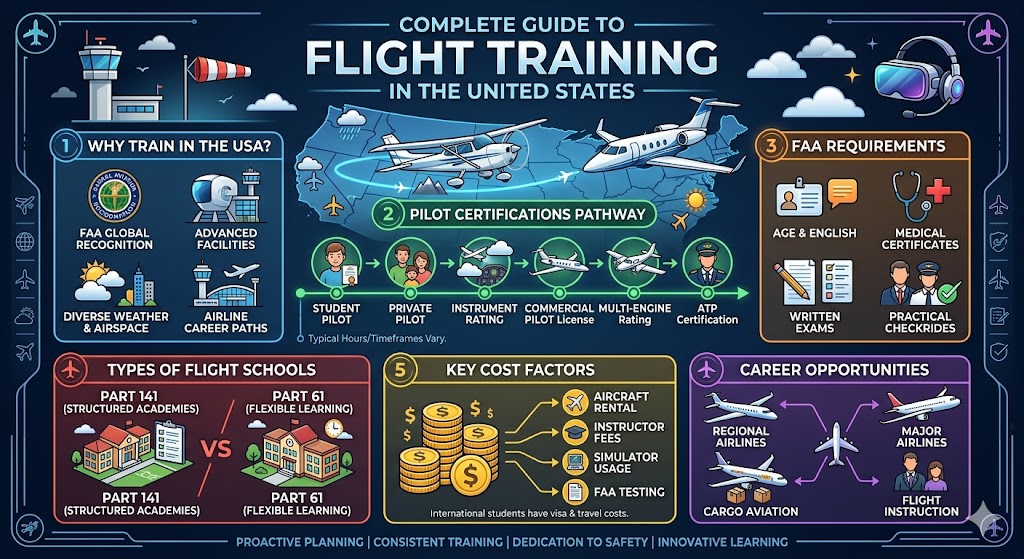
The United States is widely recognized as one of the best destinations in the world for aviation education and pilot development. From world-class aviation academies and FAA-certified flight schools to advanced simulator technologies and diverse flying environments, the country offers aspiring pilots a complete ecosystem for professional flight training.
Every year, thousands of students from across the world travel to the United States to pursue pilot certifications, commercial aviation careers, and advanced flight training programs. The global reputation of FAA certifications, combined with extensive airspace infrastructure and modern training facilities, makes the US aviation industry highly attractive for both domestic and international students.
For many aspiring pilots, however, the flight training journey can feel overwhelming. Questions about pilot licenses, FAA requirements, training costs, simulator programs, aircraft types, and airline career opportunities are extremely common. Understanding how flight training works is essential before choosing a school or investing in aviation education.
This guide explains everything students need to know about flight training in the United States, including pilot certifications, FAA regulations, training timelines, aircraft categories, aviation career paths, costs, simulator training, and how to choose the right flight school.
Real-world use cases include:
- Students pursuing airline pilot careers
- International students seeking FAA certification
- Career changers entering commercial aviation
- Business professionals pursuing private flying
- Military veterans transitioning into civilian aviation
- Pilots upgrading certifications
- Aviation enthusiasts earning a private pilot license
Evaluation Criteria for Buyers
Before choosing a flight school, aspiring pilots should evaluate:
- FAA certification status
- Aircraft fleet quality
- Instructor experience
- Simulator availability
- Student-to-instructor ratio
- Weather conditions
- Cost transparency
- Airline partnerships
- Maintenance standards
- Career support services
Best for: Airline pilot candidates, international aviation students, private pilot learners, and commercial aviation career seekers.
Not ideal for: Military-only aviation programs or drone-specific pilot training discussions.
Why the United States Is Popular for Flight Training
FAA Global Recognition
FAA certifications are respected globally and accepted by many international aviation authorities.
Diverse Weather Conditions
Students gain exposure to multiple weather environments, improving overall flying experience and operational confidence.
Large Aviation Infrastructure
The United States has one of the world’s largest aviation networks, providing extensive training opportunities.
Advanced Training Facilities
Modern aviation academies use advanced simulators, digital classrooms, and technologically updated aircraft fleets.
Airline Career Opportunities
The US aviation industry offers strong career pathways through regional airlines, charter companies, cargo operations, and major airlines.
Wide Variety of Flight Schools
Students can choose from:
- University aviation programs
- Independent flight academies
- Airline-sponsored programs
- Accelerated training schools
Competitive Training Costs
Compared to some international training markets, the United States often provides better infrastructure and aircraft availability at competitive pricing levels.
Understanding the Different Pilot Licenses in the USA
Student Pilot Certificate
This is the starting point for all aspiring pilots.
Eligibility
- Minimum age requirements apply
- English language proficiency required
- FAA medical approval necessary
Privileges
Student pilots can begin supervised flight training and solo operations under instructor authorization.
Private Pilot License PPL
The Private Pilot License allows individuals to fly aircraft for personal and recreational purposes.
Training Includes
- Aircraft controls
- Navigation
- Meteorology
- Radio communication
- Flight planning
Typical Privileges
- Recreational flying
- Family travel
- Personal transportation
Flight Hour Requirements
Training includes dual instruction and solo flight experience.
Instrument Rating
An instrument rating allows pilots to operate aircraft using flight instruments during reduced visibility conditions.
Training Focus
- IFR navigation
- Weather procedures
- Instrument approaches
- Simulator operations
Benefits
- Improved operational safety
- Enhanced pilot confidence
- Better career opportunities
Commercial Pilot License CPL
The Commercial Pilot License allows pilots to receive compensation for flying services.
Commercial Privileges
- Charter operations
- Corporate aviation
- Flight instruction pathways
- Cargo operations
Training Requirements
Commercial training includes:
- Advanced maneuvers
- Cross-country operations
- Complex aircraft experience
Multi-Engine Rating
This certification allows pilots to operate aircraft with multiple engines.
Training Areas
- Engine-out procedures
- Advanced systems management
- Multi-engine aerodynamics
Certified Flight Instructor CFI
Many pilots become instructors to build flight hours and gain professional experience.
Instructor Responsibilities
- Teaching student pilots
- Conducting flight reviews
- Supporting aviation education
Airline Transport Pilot ATP
The ATP certification represents the highest pilot certification level.
ATP Requirements
- Extensive flight hours
- Advanced testing
- Airline-level operational knowledge
Pilot Certification Comparison Table
| Certification | Main Purpose | Typical Career Stage |
|---|---|---|
| Student Pilot | Initial training | Beginner |
| Private Pilot License | Recreational flying | Entry level |
| Instrument Rating | Advanced weather flying | Intermediate |
| Commercial Pilot License | Professional aviation | Career pilot |
| Multi-Engine Rating | Advanced aircraft operations | Commercial advancement |
| Certified Flight Instructor | Flight training career | Hour building |
| ATP | Airline operations | Airline captain pathway |
FAA Requirements for Flight Training
Age Requirements
Different certifications have different minimum age requirements.
English Language Requirements
Pilots must demonstrate English communication proficiency for aviation operations.
FAA Medical Certificates
Medical certification ensures pilots meet physical and mental fitness standards.
Medical Categories
- First Class
- Second Class
- Third Class
Written Exams
FAA written exams evaluate aviation knowledge.
Topics Include
- Navigation
- Airspace
- Meteorology
- Aircraft systems
- Regulations
Practical Checkrides
A checkride evaluates both theoretical understanding and practical flight skills.
Flight Hour Requirements
Each certification requires minimum flight hour thresholds.
Part 61 vs Part 141 Flight Schools
| Feature | Part 61 | Part 141 |
|---|---|---|
| Training Flexibility | High | Structured |
| FAA Oversight | Moderate | Extensive |
| Training Speed | Flexible pace | Faster programs |
| Curriculum Structure | Instructor dependent | FAA-approved syllabus |
| International Student Suitability | Moderate | High |
| Career Orientation | Recreational and career | Strong airline focus |
| Cost Structure | Flexible | Program-based |
How Flight Training Works
Ground School Training
Ground school provides theoretical aviation education.
Subjects Include
- Aerodynamics
- Navigation
- Aircraft systems
- Weather interpretation
- Airspace regulations
- Flight planning
Flight Simulator Training
Simulators help students practice procedures safely and efficiently.
Benefits
- Lower operational costs
- Emergency scenario practice
- Instrument training support
Actual Flight Training
Students progressively learn:
- Takeoffs
- Landings
- Navigation
- Radio communication
- Emergency procedures
Solo Flights
Solo flights are major milestones where students operate aircraft independently.
Cross-Country Flights
Cross-country operations improve navigation and operational planning skills.
Checkride Preparation
Students prepare for FAA evaluations through practice flights and oral examinations.
Types of Aircraft Used in Flight Training
Single-Engine Trainers
Single-engine aircraft are commonly used for beginner training.
Training Benefits
- Lower operational costs
- Easier systems management
- Excellent learning platform
Multi-Engine Aircraft
These aircraft prepare students for commercial aviation operations.
Training Focus
- Engine management
- Multi-engine aerodynamics
- Emergency procedures
Glass Cockpit Aircraft
Modern aircraft increasingly use digital cockpit displays.
Benefits
- Improved situational awareness
- Airline-style technology exposure
Advanced Aviation Simulators
Simulators replicate real-world aviation conditions.
Uses Include
- Instrument procedures
- Emergency training
- Airline transition programs
Typical Flight Training Timeline
Private Pilot License
Usually completed within several months depending on training consistency.
Instrument Rating
Often completed after earning the PPL.
Commercial Pilot License
Commercial certification generally requires significant flight experience accumulation.
Multi-Engine Rating
Typically completed within a shorter focused training period.
Certified Flight Instructor
CFI training develops teaching and instructional skills.
ATP Certification
ATP certification requires extensive flight experience and advanced operational knowledge.
Training Timeline Comparison Table
| Certification | Typical Duration |
|---|---|
| Private Pilot License | Several months |
| Instrument Rating | Additional focused training |
| Commercial Pilot License | Extended professional pathway |
| Multi-Engine Rating | Short specialized training |
| Certified Flight Instructor | Intermediate progression |
| ATP | Long-term career milestone |
How Much Does Flight Training Cost in the United States?
Flight training costs vary significantly based on training pace, aircraft type, and school structure.
Major Cost Factors
Aircraft Rental
Aircraft operating costs represent one of the largest training expenses.
Instructor Fees
Instructor hourly rates vary based on experience and location.
Simulator Costs
Advanced simulators may involve additional training fees.
Fuel Prices
Fuel expenses affect overall training pricing.
FAA Testing Fees
Written exams and checkrides involve separate charges.
Housing Expenses
International and out-of-state students often require housing support.
International Student Costs
Visa processing and transportation increase total training investment.
Flight Training Cost Consideration Table
| Cost Category | Typical Impact |
|---|---|
| Aircraft rental | Major expense |
| Instructor time | Recurring cost |
| Simulator usage | Moderate |
| FAA exams | Required |
| Housing | Variable |
| Fuel | Operational cost |
| Equipment | Additional expense |
Housing and International Student Support
Student Visas
International students typically require aviation-related student visa support.
TSA Requirements
Certain security clearance procedures apply to international aviation students.
Housing Options
Common options include:
- Student dormitories
- Shared apartments
- Aviation housing partnerships
Transportation Support
Some academies assist students with transportation logistics.
Cultural Adaptation
International student support services often help with adjustment and communication.
Common Challenges Flight Students Face
Weather Delays
Bad weather may temporarily disrupt training schedules.
Financial Planning
Flight training requires careful financial preparation.
Training Consistency
Inconsistent training can slow progress and increase costs.
FAA Exam Preparation
Written exams require disciplined study habits.
Flight Anxiety
Many beginner pilots initially experience nervousness during training.
Scheduling Conflicts
Aircraft and instructor availability may affect timelines.
Communication Skills
Strong aviation communication skills are essential for operational success.
Time Management
Balancing study, simulator sessions, and flight training requires discipline.
How to Choose the Right Flight School in the USA
FAA Certification
Always verify FAA-approved training authorization.
Aircraft Availability
A strong fleet reduces scheduling delays.
Instructor Quality
Experienced instructors significantly improve training quality.
Simulator Facilities
Modern simulator access enhances learning efficiency.
Maintenance Standards
Well-maintained aircraft improve safety and operational reliability.
Airline Partnerships
Some schools maintain direct airline pathway programs.
Student Reviews
Past student experiences provide valuable operational insight.
Career Support Services
Career guidance helps students transition into aviation jobs.
Questions Students Should Ask Before Enrolling
Before choosing a flight school, students should ask:
- What are the total estimated costs?
- What aircraft types are used?
- How often are flights scheduled?
- Are instructors experienced?
- Is housing available?
- What simulator systems are used?
- What airline partnerships exist?
- What is the average completion timeline?
- How does weather affect training?
- What career support is provided?
Career Opportunities After Flight Training
Private Pilot Careers
Private pilots often fly recreationally or for personal transportation.
Charter Aviation
Charter operations provide business and luxury transportation services.
Corporate Aviation
Corporate pilots transport executives and business teams.
Regional Airlines
Regional airlines are common entry points for airline careers.
Major Airlines
Many pilots eventually progress into major airline operations.
Flight Instruction Careers
Flight instructors build operational experience while teaching aviation students.
Cargo Aviation
Cargo pilots support logistics and freight transportation.
Agricultural Aviation
Agricultural pilots support crop spraying and environmental aviation operations.
The Role of Technology in Modern Flight Training
VR Flight Simulators
Virtual reality technologies improve immersive learning experiences.
AI-Assisted Training
Artificial intelligence helps analyze pilot performance and training efficiency.
Digital Flight Planning
Modern pilots increasingly use digital aviation planning tools.
Electronic Flight Bags
Electronic flight bags replace many traditional paper-based aviation documents.
Online Ground School
Digital education platforms support remote aviation learning.
Aviation Learning Platforms
Interactive aviation education systems improve student engagement.
Future Trends in Flight Training
Electric Training Aircraft
Electric aircraft may reduce operational training costs in the future.
AI-Based Flight Simulation
AI-driven simulators will improve pilot evaluation systems.
Sustainable Aviation Training
Environmental awareness is influencing aviation education practices.
Remote Learning Platforms
Online aviation education continues expanding globally.
Data-Driven Pilot Performance Analysis
Advanced analytics improve pilot development and safety assessment.
Common Mistakes Student Pilots Make
- Choosing schools based only on price
- Ignoring FAA medical requirements
- Inconsistent training schedules
- Poor study habits
- Rushing certifications
- Underestimating total costs
- Weak communication practice
- Skipping simulator preparation
- Delaying written exam preparation
- Failing to maintain discipline during training
Frequently Asked Questions
1. How long does flight training take?
Training timelines vary depending on student availability, weather, school structure, and certification goals.
2. What is the cost of becoming a pilot in the USA?
Costs vary significantly depending on aircraft usage, certifications pursued, and training pace.
3. Can international students train in the US?
Yes. Many FAA-certified schools support international student enrollment and visa processing.
4. What medical certificates are required?
Medical requirements depend on the pilot certification level and operational goals.
5. What is the difference between PPL and CPL?
A Private Pilot License supports personal flying, while a Commercial Pilot License allows professional aviation operations.
6. Are airline jobs guaranteed after training?
No. Airline employment depends on qualifications, flight hours, market demand, and interview performance.
7. How difficult are FAA exams?
FAA exams require disciplined study and strong aviation knowledge preparation.
8. Is flight training safe?
Yes. FAA-certified flight schools follow strict operational safety procedures and maintenance standards.
9. Can students work while training?
Some students work part-time depending on visa status, scheduling flexibility, and school structure.
10. What aircraft are commonly used for training?
Single-engine trainer aircraft are most commonly used during early flight training stages.
Conclusion
The United States continues to remain one of the world’s most respected destinations for aviation education and professional pilot development. With FAA-certified training standards, advanced aviation infrastructure, experienced instructors, diverse weather conditions, and strong airline career pathways, the country provides aspiring pilots with outstanding opportunities for long-term aviation success. From private pilot licenses and instrument ratings to commercial aviation careers and ATP certification pathways, flight training in the United States offers structured growth for both domestic and international students. Choosing the right flight school, maintaining consistent training discipline, understanding FAA requirements, and planning financially are essential steps toward becoming a successful professional pilot. As aviation technology continues evolving through AI-assisted learning, advanced simulators, and digital flight systems, the future of flight training will become even more innovative, efficient, and globally connected for the next generation of pilots.
