
Introduction
Becoming a commercial pilot is a dream for many aviation enthusiasts. The opportunity to fly advanced aircraft, travel across destinations, and build a professional aviation career attracts thousands of aspiring pilots every year. However, becoming a successful pilot requires much more than simply learning how to operate an aircraft.
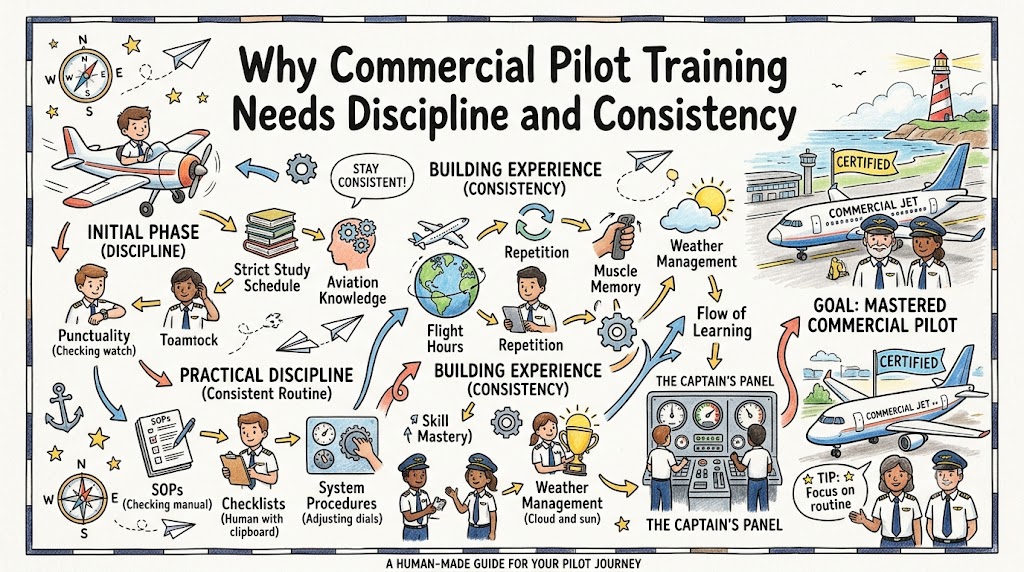
Commercial aviation is built around precision, responsibility, and safety. Every professional pilot must develop strong technical knowledge, decision-making skills, and professional habits. Among all the qualities required during pilot training, discipline and consistency play one of the most important roles.
Commercial pilot training is a structured journey that combines classroom learning, flight practice, simulator sessions, examinations, and continuous skill development. Students who approach training with discipline and maintain consistent effort are better prepared to handle the challenges of aviation.
Aviation is not a field where occasional effort creates success. Pilots must continuously practice procedures, maintain knowledge, follow safety standards, and improve their abilities throughout their careers. Discipline and consistency help aspiring pilots develop the mindset required to become confident and responsible aviation professionals.
Why Discipline Matters in Commercial Pilot Training
Discipline is one of the foundations of professional aviation. A pilot’s responsibility goes beyond flying an aircraft. Pilots must make accurate decisions, follow strict procedures, communicate effectively, and maintain safety standards in every situation.
During commercial pilot training, discipline helps students develop habits that are essential for their future careers.
Following Training Schedules
Flight training requires careful planning. Students must attend ground classes, complete flight lessons, prepare for assessments, and maintain required training hours.
A disciplined student understands that every training session contributes to their overall progress.
Missing lessons, delaying preparation, or approaching training casually can slow down development and create unnecessary challenges.
Maintaining Safety Procedures
Safety is the highest priority in aviation. Professional pilots follow detailed procedures before, during, and after every flight.
Discipline helps student pilots develop the habit of:
- Completing aircraft inspections
- Following checklists
- Communicating clearly
- Evaluating risks
- Making responsible decisions
These habits become automatic through repeated practice and create a strong safety-focused mindset.
Developing Professional Behavior
Commercial pilots represent airlines, passengers, and aviation organizations. Professional behavior begins during training.
Discipline helps students develop:
- Responsibility
- Punctuality
- Respect for procedures
- Effective communication
- Positive learning habits
These qualities are valuable throughout an aviation career.
The Importance of Consistency in Flight Training
While discipline creates structure, consistency creates improvement.
Learning to fly is a gradual process. Students must repeatedly practice skills until they become natural and reliable.
Building Strong Flying Skills
Aircraft control, navigation, communication, and decision-making skills improve through regular practice.
Consistent training allows students to:
- Strengthen muscle memory
- Improve confidence
- Understand aircraft behavior
- Refine flying techniques
Long gaps between training sessions can make skill development more difficult because students may spend additional time rebuilding previously learned abilities.
Improving Knowledge Retention
Commercial pilot training includes important theoretical subjects such as:
- Aerodynamics
- Aircraft systems
- Meteorology
- Navigation
- Aviation regulations
- Flight planning
Consistent study habits help students understand complex concepts and prepare effectively for examinations.
Aviation knowledge requires continuous learning because pilots must make decisions based on technical understanding.
Key Areas Where Discipline Makes a Difference
Academic Preparation
A common misconception is that pilots only need strong flying skills. In reality, professional pilots require extensive theoretical knowledge.
Understanding aviation principles helps pilots make better decisions during different flight situations.
Disciplined students create study routines and regularly review important concepts.
Important areas of aviation education include:
Aerodynamics
Understanding how aircraft fly helps pilots manage aircraft performance and respond correctly during different conditions.
Meteorology
Weather knowledge is essential for safe flight planning and decision-making.
Navigation
Pilots must understand routes, instruments, charts, and positioning techniques.
Aviation Regulations
Following aviation rules and procedures is a fundamental responsibility of every pilot.
Flight Practice and Skill Development
Flight training requires preparation before every lesson.
A disciplined student pilot:
- Reviews previous lessons
- Studies upcoming exercises
- Listens carefully to instructor feedback
- Practices procedures regularly
Each flight lesson provides an opportunity to improve.
Safety Awareness
Safety discipline separates professional pilots from casual learners.
Students must learn to:
- Identify risks
- Follow standard operating procedures
- Manage unexpected situations
- Communicate effectively
A safety-focused mindset developed during training continues throughout a pilot’s career.
Time Management
Pilot training requires balancing multiple responsibilities.
Students must manage:
- Flight lessons
- Ground school
- Self-study
- Examinations
- Personal commitments
Strong time management skills help students stay organized and maintain steady progress.
Challenges Faced by Students Without Discipline and Consistency
Pilot training can be demanding, and students who lack structured habits may experience difficulties.
Slow Skill Development
Flying skills require repeated practice. Inconsistent training can make progress slower.
Difficulty Preparing for Exams
Aviation exams require detailed understanding of technical subjects. Last-minute preparation is often not enough.
Reduced Confidence
Confidence comes from preparation and experience. Students who practice consistently usually develop stronger confidence in their abilities.
Training Delays
Poor planning, missed lessons, or inadequate preparation can increase the time required to complete training.
How Successful Pilots Build Discipline During Training
Professional pilots develop habits that continue throughout their careers.
Creating Daily Learning Routines
Successful students dedicate time every day to aviation learning.
This may include:
- Reviewing lessons
- Studying aircraft systems
- Practicing procedures
- Preparing questions for instructors
Preparing Before Every Flight
Preparation is a key part of aviation professionalism.
Before flying, students should understand:
- Flight objectives
- Weather conditions
- Aircraft information
- Expected procedures
Learning From Mistakes
Mistakes are part of the learning process. Professional pilots analyze mistakes and use feedback to improve.
A disciplined approach means accepting feedback and continuously developing skills.
Maintaining Mental and Physical Readiness
Flying requires concentration and decision-making ability.
Students should focus on:
- Proper rest
- Healthy routines
- Mental preparation
- Stress management
The Connection Between Training Discipline and Airline Success
Airlines look for pilots who demonstrate professionalism, responsibility, and safety awareness.
Technical skills are important, but professional behavior is equally valuable.
Disciplined pilots are more likely to demonstrate:
- Strong decision-making
- Effective communication
- Reliability
- Safety-focused thinking
- Teamwork abilities
The habits developed during commercial pilot training become the foundation for a successful aviation career.
Tips for Developing Discipline During Commercial Pilot Training
1. Create a Structured Training Schedule
Planning study time and flight preparation helps maintain consistent progress.
2. Prepare Before Every Lesson
Reviewing upcoming topics allows students to gain more value from instructor guidance.
3. Practice Regularly
Consistency improves flying confidence and technical ability.
4. Accept Instructor Feedback
Feedback helps identify improvement areas and strengthens performance.
5. Maintain Strong Study Habits
Regular learning creates better understanding and long-term knowledge retention.
6. Develop a Safety-First Mindset
Every decision in aviation should prioritize safety.
How FLIGHTTRAININGUS.COM Supports Aspiring Pilots
Choosing the right guidance and training environment is an important step for future pilots.
FLIGHTTRAININGUS.COM helps aspiring aviation professionals understand the importance of structured flight education, professional development, and career preparation.
A strong pilot training journey combines:
- Quality instruction
- Practical flight experience
- Aviation knowledge
- Professional discipline
- Continuous improvement
By focusing on these areas, aspiring pilots can build the foundation needed for a successful aviation career.
Common Mistakes Student Pilots Should Avoid
Treating Training Casually
Pilot training requires commitment. Casual effort can slow progress and affect skill development.
Ignoring Theoretical Knowledge
Flying skills depend on understanding aviation principles.
Avoiding Feedback
Instructor feedback is one of the most valuable tools for improvement.
Lack of Preparation
Preparation before flights improves learning and performance.
Inconsistent Practice
Regular practice is essential for developing reliable flying skills.
FAQs
1. Why is discipline important in commercial pilot training?
Discipline helps student pilots follow training schedules, maintain safety procedures, improve knowledge, and develop professional aviation habits.
2. Why is consistency important for flight training?
Consistency allows students to continuously improve their flying skills, retain knowledge, and build confidence through regular practice.
3. What qualities help someone become a successful commercial pilot?
Successful pilots develop discipline, responsibility, communication skills, technical knowledge, decision-making abilities, and a safety-focused mindset.
4. Is flying skill enough to become a commercial pilot?
No. Commercial pilots need both practical flying skills and strong theoretical knowledge to operate aircraft safely and professionally.
5. How can student pilots improve during training?
Students can improve by practicing regularly, preparing before lessons, studying consistently, and accepting instructor feedback.
6. Why do airlines value disciplined pilots?
Airlines value disciplined pilots because aviation requires reliability, safety awareness, teamwork, and responsible decision-making.
7. What challenges do students face during pilot training?
Common challenges include managing study requirements, developing flying skills, preparing for exams, and maintaining consistent progress.
8. How does flight training prepare students for airline careers?
Flight training develops technical abilities, professional habits, safety awareness, and decision-making skills needed in commercial aviation.
9. What should students focus on before starting pilot training?
Students should understand training requirements, develop strong learning habits, and prepare mentally for a structured aviation program.
10. Can discipline improve pilot training success?
Yes. Discipline helps students remain focused, organized, and committed throughout their aviation training journey.
Conclusion
Commercial pilot training is a challenging but rewarding journey that requires dedication, patience, and continuous effort. While learning aircraft operations and aviation theory are essential, discipline and consistency create the foundation for long-term success. Every professional pilot begins as a student who must develop strong habits, respect safety procedures, and continuously improve skills. The effort invested during training shapes the mindset required for a successful aviation career. For aspiring pilots, discipline is not just a training requirement; it is a professional quality that continues throughout their entire flying career. With the right approach, structured learning, and consistent dedication, students can move closer to achieving their goal of becoming confident and responsible commercial pilots.
