
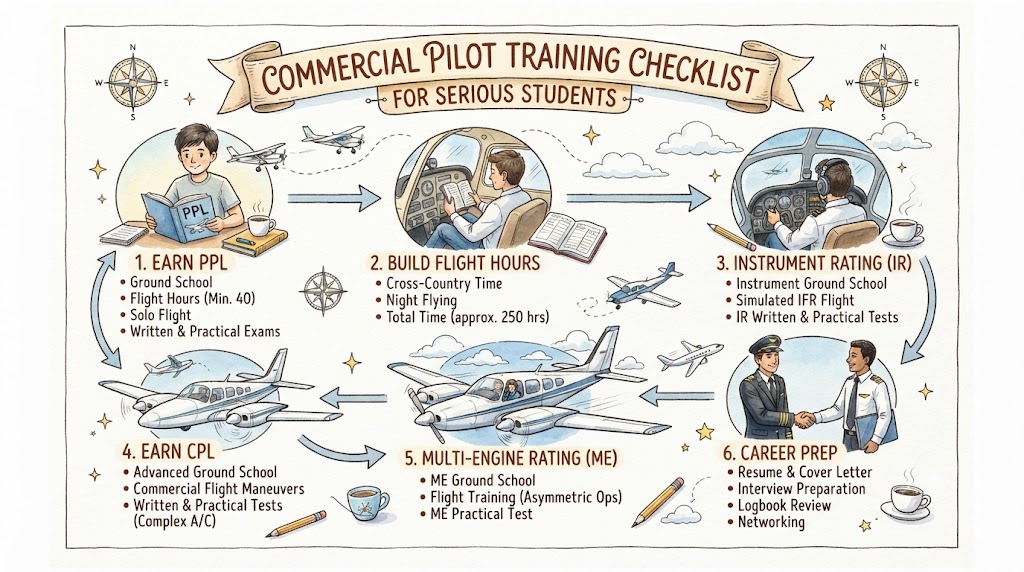
Introduction
Becoming a commercial pilot is more than earning a license—it’s the beginning of a professional aviation career built on discipline, technical knowledge, and consistent training. Whether your dream is to fly for an airline, operate charter flights, work in corporate aviation, or become a flight instructor, success starts with proper preparation. Commercial pilot training requires dedication, careful planning, and a commitment to learning both on the ground and in the air.
Many aspiring pilots focus primarily on accumulating flight hours, but successful commercial pilots understand that mastering aviation knowledge, maintaining strong study habits, and developing sound decision-making skills are equally important. Preparing for training before your first lesson can save time, reduce costs, and improve your overall learning experience.
Understanding Commercial Pilot Training
Commercial pilot training prepares students to operate aircraft professionally while meeting the knowledge, skill, and safety standards required for commercial operations. Unlike private pilot training, which focuses on recreational flying, commercial pilot training emphasizes precision, professionalism, advanced aircraft handling, and operational decision-making.
During training, students develop skills in:
- Advanced aircraft maneuvers
- Flight planning
- Cross-country navigation
- Aircraft systems
- Aviation weather
- Aeronautical decision-making
- Emergency procedures
- Commercial flight operations
Commercial pilot training also lays the foundation for future certifications such as instrument rating, multi-engine rating, and certified flight instructor qualifications.
Why a Commercial Pilot Training Checklist Matters
Beginning flight training without a structured plan often leads to unnecessary delays, additional expenses, and inconsistent progress.
A well-organized checklist helps students:
- Stay focused on training goals
- Track certification requirements
- Prepare for each training milestone
- Reduce stress during flight school
- Improve learning efficiency
- Build confidence before examinations
Successful pilots are known for their preparation, and that habit begins long before entering the cockpit.
1. Confirm You Meet Basic Eligibility Requirements
Before enrolling in a commercial pilot training program, ensure you meet the general eligibility requirements.
Important considerations include:
- Meeting the minimum age requirements
- Demonstrating English language proficiency
- Holding the appropriate pilot certificate required for advanced training
- Maintaining legal identification documents
- Being prepared to complete aviation medical certification
Understanding these requirements early helps prevent unnecessary interruptions during training.
2. Obtain the Appropriate FAA Medical Certificate
Medical fitness is a fundamental requirement for professional pilots.
Before investing in flight training, schedule an examination with an Aviation Medical Examiner (AME). The medical evaluation helps determine whether you meet the health standards necessary for commercial pilot operations.
Maintaining good physical health throughout your aviation career supports safe flight operations and helps prevent unexpected delays in certification.
3. Choose the Right Flight School
Selecting the right training environment is one of the most important decisions an aspiring pilot will make.
When comparing flight schools, consider:
- Instructor qualifications
- Safety culture
- Aircraft availability
- Maintenance standards
- Student support
- Training flexibility
- Classroom facilities
- Fleet condition
- Scheduling efficiency
A supportive learning environment often has a greater impact on long-term success than simply choosing the lowest-priced program.
4. Understand the Cost of Commercial Pilot Training
Professional pilot training represents a significant investment, making financial planning an important part of your preparation.
Typical training expenses may include:
- Flight instruction
- Aircraft rental
- Ground school
- Aviation textbooks
- Flight planning materials
- Aviation headset
- Medical examination
- Knowledge test fees
- Practical examination fees
- Flight simulator sessions
Creating a realistic budget helps students avoid interruptions caused by unexpected expenses.
5. Build Strong Ground School Knowledge
Great pilots spend as much time learning on the ground as they do in the air.
Ground school introduces essential aviation subjects such as:
- Aerodynamics
- Aircraft systems
- Weather interpretation
- Federal aviation regulations
- Navigation
- Flight planning
- Airspace classification
- Aircraft performance
- Weight and balance
- Aviation communications
A strong understanding of these topics makes flight lessons more productive and enjoyable.
6. Develop Consistent Study Habits
Commercial aviation demands continuous learning.
Successful students typically:
- Review lessons daily
- Read training materials before each flight
- Practice flight planning
- Study aviation weather
- Complete practice exams
- Review instructor feedback
- Maintain organized notes
Small daily improvements often lead to significant long-term success.
7. Commit to Regular Flight Training
Consistency is one of the biggest factors affecting pilot progress.
Students who fly regularly tend to retain skills more effectively than those with long breaks between lessons.
Frequent flying helps improve:
- Aircraft control
- Landing techniques
- Navigation
- Radio communication
- Emergency procedures
- Confidence
Developing a regular training schedule also helps reduce overall training time.
8. Build Flight Hours Efficiently
Accumulating flight experience is a key milestone on the path to becoming a commercial pilot.
Every flight provides opportunities to improve:
- Decision-making
- Aircraft handling
- Weather evaluation
- Situational awareness
- Navigation skills
- Professional communication
Rather than simply logging hours, focus on gaining meaningful experience during each lesson.
9. Prioritize Aviation Safety
Safety should always remain your highest priority throughout training.
Professional pilots develop habits that reduce risk during every flight.
Essential safety practices include:
- Thorough pre-flight inspections
- Weather briefings
- Risk assessment
- Fuel planning
- Emergency preparedness
- Continuous situational awareness
- Clear communication
Building these habits early creates a strong foundation for a successful aviation career.
10. Prepare Thoroughly for the FAA Knowledge Test
The FAA knowledge examination evaluates your understanding of aviation theory and regulations.
Preparation strategies include:
- Following a structured study plan
- Completing practice examinations
- Reviewing incorrect answers
- Seeking clarification from instructors
- Studying consistently rather than cramming
Confidence comes from preparation rather than memorization alone.
11. Get Ready for the Practical Checkride
The practical examination evaluates both your aviation knowledge and your ability to safely operate an aircraft.
Preparation includes:
- Reviewing aircraft systems
- Practicing commercial maneuvers
- Refining navigation skills
- Demonstrating sound judgment
- Understanding emergency procedures
- Communicating clearly with the examiner
Approaching the checkride with confidence and professionalism often leads to better performance.
Essential Equipment Every Serious Student Should Own
Having the right equipment improves both comfort and efficiency during training.
Recommended items include:
- Aviation headset
- Flight bag
- Pilot logbook
- Kneeboard
- Aviation charts
- Electronic flight planning tools
- Flashlight
- Backup batteries
- Sunglasses
- Notebook for instructor feedback
Investing in quality equipment supports long-term success throughout your aviation career.
Common Mistakes Student Pilots Should Avoid
Many students encounter similar challenges during training.
Common mistakes include:
Flying Too Infrequently
Long gaps between lessons reduce skill retention.
Ignoring Ground School
Strong theoretical knowledge improves practical flight performance.
Poor Time Management
Balancing study, flying, and personal responsibilities requires careful planning.
Avoiding Questions
Experienced instructors encourage students to ask questions whenever concepts are unclear.
Neglecting Physical Well-Being
Proper sleep, hydration, and nutrition directly affect learning and flight performance.
Tips to Complete Training More Efficiently
Students who progress efficiently often share similar habits.
Helpful strategies include:
- Fly consistently each week.
- Study every day.
- Review lessons immediately after flights.
- Practice chair flying.
- Use flight simulators when appropriate.
- Stay physically fit.
- Set measurable goals.
- Communicate openly with instructors.
Steady progress is more valuable than rushing through training.
Career Opportunities After Commercial Pilot Training
Earning a commercial pilot certificate opens the door to many exciting aviation careers.
Potential career paths include:
- Airline Pilot
- Corporate Pilot
- Charter Pilot
- Flight Instructor
- Cargo Pilot
- Air Ambulance Pilot
- Agricultural Pilot
- Aerial Survey Pilot
- Sightseeing Tour Pilot
- Government Aviation Services
Many pilots continue building experience before advancing into larger commercial aviation roles.
Why Professional Flight Training Matters
Quality instruction plays a significant role in developing confident and competent pilots.
Professional flight training provides:
- Experienced instructors
- Structured learning programs
- Well-maintained aircraft
- Safety-focused operations
- Practical career guidance
- Consistent performance feedback
- Modern training resources
Choosing a reputable training organization creates a strong foundation for long-term aviation success.
Commercial Pilot Training Success Checklist
Before Starting
- Research flight schools.
- Complete your medical examination.
- Plan your training budget.
- Set career goals.
- Organize study materials.
During Training
- Attend every lesson prepared.
- Review ground school regularly.
- Maintain your logbook accurately.
- Practice consistently.
- Ask instructors for feedback.
Before the Checkride
- Complete mock evaluations.
- Review commercial maneuvers.
- Study regulations.
- Organize required documents.
- Build confidence through preparation.
Frequently Asked Questions
1. How long does commercial pilot training take?
Training duration varies depending on your schedule, previous flight experience, and how consistently you fly. Regular training often leads to faster progress.
2. Do I need previous flying experience?
Most commercial pilot candidates first earn the required pilot certifications before beginning advanced commercial training.
3. Is commercial pilot training difficult?
It is challenging but achievable with consistent study, disciplined flying, and guidance from experienced instructors.
4. How important is ground school?
Ground school is essential because it provides the theoretical knowledge required for safe and professional flight operations.
5. Can I work while completing flight training?
Many students balance employment with training, although maintaining a consistent flight schedule is important for steady progress.
6. What equipment should I buy first?
A quality aviation headset, logbook, flight bag, and essential study materials are good initial investments.
7. How can I improve faster?
Regular flying, daily study, simulator practice, and reviewing instructor feedback all contribute to faster improvement.
8. What career options are available after earning a commercial pilot certificate?
Commercial pilots may pursue careers in airlines, charter operations, corporate aviation, cargo services, flight instruction, aerial surveying, and many other aviation sectors.
9. How important are flight hours?
Flight hours are essential, but the quality of your training and experience is just as important as the total number of hours logged.
10. What is the key to success in commercial pilot training?
Preparation, discipline, consistent practice, continuous learning, and a strong commitment to aviation safety are the most important factors for success.
Conclusion
Commercial pilot training is a rewarding journey that demands dedication, preparation, and a passion for aviation. Following a structured checklist helps serious students stay organized, build confidence, and develop the knowledge and flying skills required for a successful professional career. By selecting a quality flight training program, maintaining consistent study habits, prioritizing safety, and embracing continuous learning, aspiring pilots can confidently move toward achieving their aviation goals. Every lesson, every flight hour, and every challenge brings you one step closer to becoming a skilled and professional commercial pilot.
