
Introduction
Becoming a commercial pilot is an exciting career goal that combines technical knowledge, practical flying skills, and a commitment to safety. Every year, thousands of aspiring pilots begin flight training with dreams of flying for airlines, corporate aviation, charter companies, or other professional aviation organizations. While enthusiasm is important, successful commercial pilot training begins long before the first lesson in the cockpit.
Preparing in advance helps students build confidence, understand aviation fundamentals, develop effective study habits, and adapt more easily to the demands of professional flight training. It also allows future pilots to plan financially, meet medical requirements, and choose the right flight school for their career goals.
Commercial pilot flight training is more advanced than recreational flying. It requires discipline, attention to detail, continuous learning, and the ability to make sound decisions in changing situations. Students who prepare thoroughly often find it easier to progress through their training and build the skills expected of professional pilots.
What Is Commercial Pilot Flight Training?
Commercial pilot flight training is designed to prepare pilots for professional flying responsibilities. Unlike basic recreational training, commercial training develops advanced aircraft handling skills, navigation techniques, decision-making abilities, and operational knowledge required for professional aviation.
During training, students learn to operate aircraft with greater precision while following established aviation procedures and safety practices.
Commercial pilot training can lead to career opportunities such as:
- Airline Pilot
- Charter Pilot
- Corporate Aviation Pilot
- Flight Instructor
- Cargo Pilot
- Aerial Survey Operations
- Aviation Support Services
While career opportunities vary depending on experience, additional ratings, and aviation authority requirements, commercial pilot training is an important step toward professional aviation.
Why Preparation Matters Before Flight Training
Preparing before beginning commercial pilot training provides several advantages.
Students who understand aviation basics before arriving at flight school often adapt more quickly to classroom instruction and practical flight lessons.
Good preparation can help:
- Improve learning efficiency
- Increase confidence during training
- Reduce unnecessary stress
- Build better study habits
- Improve safety awareness
- Support better decision-making
Commercial flight training involves both classroom education and practical flying. Being prepared allows students to focus more on developing their flying skills rather than struggling with unfamiliar concepts.
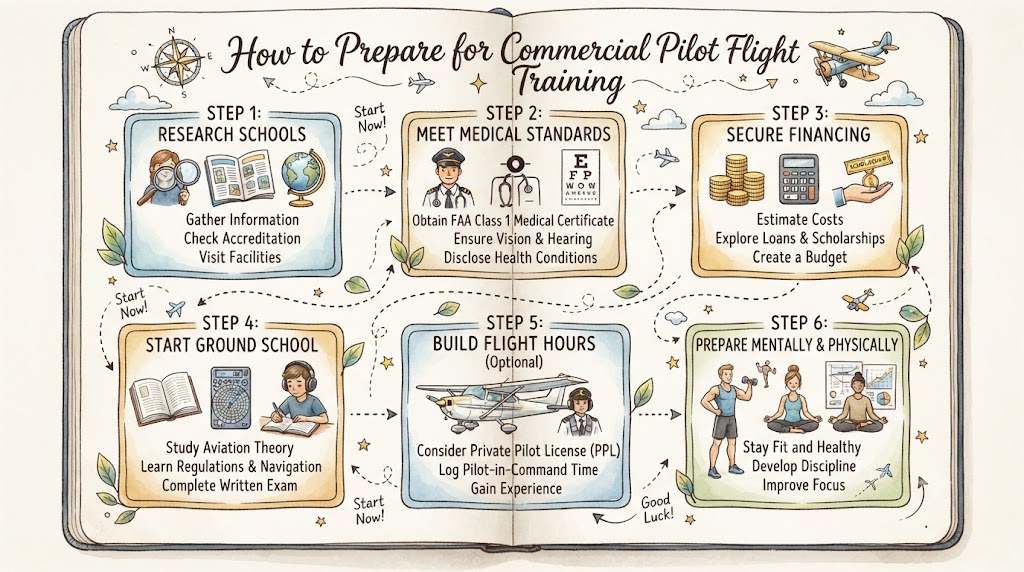
Step-by-Step Guide to Preparing for Commercial Pilot Flight Training
1. Understand Commercial Pilot License Requirements
Before enrolling in a training program, students should understand the licensing requirements established by the applicable aviation authority.
These generally include:
- Minimum age requirements
- Educational qualifications
- Language proficiency
- Medical certification
- Required flight experience
- Knowledge and practical examinations
Requirements vary by country and aviation authority, so reviewing the applicable regulations is an important first step.
2. Obtain the Required Aviation Medical Certificate
Commercial pilots must meet specific medical standards to ensure they are fit for flight operations.
Aviation medical examinations generally evaluate:
- Vision
- Hearing
- Cardiovascular health
- General physical condition
- Overall fitness for flying
Completing the required medical evaluation before investing significant time in training helps students understand any medical considerations early in the process.
3. Strengthen Your Aviation Knowledge
Commercial flight training moves quickly, making a strong theoretical foundation extremely valuable.
Students should become familiar with subjects such as:
Aviation Regulations
Understanding aviation rules helps pilots operate safely and responsibly.
Important topics include:
- Airspace classifications
- Pilot responsibilities
- Operational limitations
- Flight procedures
Aerodynamics
Students should understand how aircraft generate lift, how control surfaces function, and how different flight conditions affect aircraft performance.
Aircraft Systems
Learning the basic operation of aircraft systems helps students understand:
- Engines
- Fuel systems
- Electrical systems
- Flight controls
- Landing gear
- Instruments
Navigation
Navigation knowledge includes:
- Aviation charts
- Flight planning
- Route selection
- Position awareness
Meteorology
Weather plays a major role in aviation safety.
Students should understand:
- Wind
- Clouds
- Visibility
- Weather forecasts
- Thunderstorms
- Weather-related decision-making
Flight Planning
Basic flight planning skills include:
- Route preparation
- Fuel planning
- Performance calculations
- Alternate airport planning
4. Improve Basic Flying Skills
Students who already have previous flying experience should review fundamental flying skills before beginning commercial training.
Areas to practice include:
- Aircraft control
- Smooth takeoffs
- Consistent landings
- Navigation
- Radio communication
- Situational awareness
Reviewing these skills allows instructors to focus on advanced commercial-level techniques.
5. Develop Good Study Habits
Commercial pilot training requires consistent learning.
Successful students often create structured study routines.
Helpful habits include:
- Daily study sessions
- Reviewing lesson notes
- Practicing flight planning
- Completing knowledge quizzes
- Reading aviation publications
Studying regularly is generally more effective than attempting to learn large amounts of information at once.
6. Build Physical and Mental Readiness
Professional pilots depend on both physical health and mental focus.
Students should develop habits that support good performance.
These include:
- Getting enough sleep
- Eating balanced meals
- Staying physically active
- Managing stress
- Maintaining concentration
Healthy habits help pilots remain alert and make sound decisions during training and flight operations.
7. Plan Your Training Budget
Commercial pilot training requires financial planning.
Students should prepare for expenses such as:
- Flight training
- Ground school
- Training materials
- Medical examinations
- Examination fees
- Aviation equipment
Planning ahead helps reduce financial stress during training.
8. Choose the Right Flight School
Selecting a quality flight school is one of the most important decisions for aspiring commercial pilots.
Consider factors such as:
- Instructor experience
- Aircraft availability
- Safety culture
- Maintenance standards
- Student support
- Scheduling flexibility
- Reputation
Visiting the school and speaking with instructors can help students make informed decisions.
9. Learn Aviation Communication
Communication is an essential pilot skill.
Students should become familiar with:
- Standard aviation phraseology
- Radio communication procedures
- Listening skills
- Clear communication techniques
Confidence in radio communication helps students manage flight operations more effectively.
10. Set Realistic Career Goals
Commercial pilot training is one step in a larger aviation career.
Students should think about long-term objectives such as:
- Airline operations
- Corporate aviation
- Charter flying
- Flight instruction
- Specialized aviation roles
Clear goals help guide future training decisions.
Essential Skills Every Commercial Pilot Student Should Develop
Decision-Making
Pilots continuously evaluate weather, aircraft performance, navigation, and operational conditions.
Developing sound judgment is essential.
Situational Awareness
Understanding aircraft position, surrounding traffic, weather, and flight conditions improves safety.
Time Management
Professional pilots must balance study, flight lessons, preparation, and personal responsibilities.
Good time management improves learning efficiency.
Discipline
Following procedures consistently helps build safe operating habits.
Communication
Effective communication with instructors, crew members, and air traffic control is essential throughout training.
Professionalism
Professional behavior includes punctuality, preparation, responsibility, and respect for safety procedures.
Problem-Solving
Pilots regularly analyze changing situations and determine appropriate actions.
Developing analytical thinking supports safer flight operations.
Common Mistakes Beginners Make Before Flight Training
Starting Without Research
Beginning flight training without understanding licensing requirements or career paths can create confusion later.
Ignoring Ground School Preparation
Strong theoretical knowledge supports better flight performance.
Students should begin studying before formal training starts.
Poor Financial Planning
Unexpected expenses can interrupt training.
Creating a realistic financial plan helps maintain consistent progress.
Irregular Study Habits
Studying only before examinations makes learning more difficult.
Regular review improves long-term understanding.
Choosing a Flight School Only Based on Cost
Training quality should be considered alongside tuition costs.
Instructor experience and safety standards are equally important.
Neglecting Physical Fitness
Healthy pilots generally perform better during demanding training schedules.
Commercial Pilot Training Preparation Checklist
Before starting flight training, review this preparation checklist:
- Research commercial pilot license requirements
- Complete the required aviation medical examination
- Select a reputable flight school
- Organize your training budget
- Study aviation regulations and basic aerodynamics
- Learn navigation fundamentals
- Practice aviation communication
- Purchase required training materials
- Create a weekly study schedule
- Set clear long-term career goals
Following a structured checklist helps students begin training with greater confidence.
Commercial Pilot Training vs Private Pilot Training
| Factor | Private Pilot Training | Commercial Pilot Training |
|---|---|---|
| Main Objective | Recreational flying | Professional aviation career |
| Flight Complexity | Basic aircraft operations | Advanced flight precision and procedures |
| Ground Knowledge | Fundamental aviation theory | More comprehensive technical knowledge |
| Flight Precision | Standard proficiency | Professional-level accuracy |
| Career Opportunities | Limited recreational use | Airline, charter, corporate, cargo, and flight instruction opportunities |
What to Expect During Commercial Pilot Training
Commercial training combines classroom learning with extensive practical flight experience.
Students can expect:
Ground School
Learning aviation regulations, meteorology, aircraft systems, navigation, aerodynamics, and flight planning.
Flight Lessons
Developing advanced flying skills under instructor supervision.
Cross-Country Flights
Planning and conducting longer flights using navigation techniques.
Instrument Procedures
Learning to operate aircraft using flight instruments where applicable to the training program.
Emergency Training
Practicing procedures for abnormal and emergency situations.
Knowledge Examinations
Demonstrating understanding of aviation theory.
Practical Flight Evaluations
Showing proficiency in aircraft handling and decision-making skills.
Training gradually builds the confidence and competence required for professional flying.
Tips for Success During Flight Training
Students can improve their training experience by following these practical recommendations:
- Arrive prepared for every lesson.
- Review previous lessons before each flight.
- Ask instructors questions whenever clarification is needed.
- Practice checklist discipline consistently.
- Learn from mistakes instead of becoming discouraged.
- Maintain a positive attitude throughout training.
- Stay committed to long-term aviation goals.
- Continue learning outside the classroom.
Consistency is often one of the biggest contributors to successful pilot training.
Career Opportunities After Commercial Pilot Training
A Commercial Pilot License can open the door to a wide variety of aviation careers.
Potential career paths include:
Airline Pilot
Many pilots continue building experience and additional qualifications before pursuing airline opportunities.
Charter Pilot
Charter operations provide flexible flying assignments for business and private travelers.
Corporate Aviation
Corporate pilots transport executives and business teams using privately operated aircraft.
Flight Instructor
Many commercial pilots become instructors to gain additional flight experience while helping new students learn.
Cargo Aviation
Cargo operations transport goods and packages using a wide range of aircraft.
Special Mission Flying
Additional experience may lead to opportunities in aerial surveying, photography, agricultural aviation, and other specialized operations.
Future of Commercial Pilot Training
Commercial aviation training continues to evolve through new technology and modern teaching methods.
Future developments include:
- Advanced flight simulators
- Digital learning platforms
- AI-assisted pilot training tools
- Glass cockpit familiarization
- Competency-based training programs
- Improved safety management education
These innovations help prepare future pilots for increasingly advanced aircraft and aviation systems.
Frequently Asked Questions
1. How do I prepare for commercial pilot flight training?
Begin by understanding licensing requirements, completing the required medical examination, studying aviation fundamentals, selecting a quality flight school, and developing strong study habits.
2. What should I study before starting flight school?
Focus on aviation regulations, aerodynamics, meteorology, aircraft systems, navigation, and flight planning.
3. Do I need a medical certificate before commercial training?
Most commercial pilot pathways require an aviation medical certificate that meets the applicable aviation authority’s standards.
4. Is previous flying experience helpful?
Yes. Previous flight experience can improve confidence and make the transition into advanced training smoother.
5. How difficult is commercial pilot training?
Commercial pilot training requires dedication, consistent study, and regular flight practice, but proper preparation can make the learning process more manageable.
6. What skills should student pilots develop?
Decision-making, communication, discipline, situational awareness, time management, and professionalism are all important skills.
7. How do I choose a good flight school?
Evaluate instructor qualifications, aircraft availability, maintenance standards, safety culture, scheduling flexibility, and student support.
8. How should I prepare financially for pilot training?
Create a realistic budget that includes training expenses, study materials, medical examinations, testing fees, and additional aviation equipment.
9. What should I expect during commercial pilot training?
Expect classroom instruction, practical flight lessons, navigation exercises, emergency training, examinations, and continuous skill development.
10. What career opportunities are available after earning a Commercial Pilot License?
Depending on experience and additional qualifications, opportunities may include airline operations, charter aviation, corporate flying, cargo transport, flight instruction, and other aviation services.
Conclusion
Preparing for commercial pilot flight training is one of the most important steps toward building a successful aviation career. While flight lessons are central to the journey, success begins with careful planning, strong study habits, physical readiness, financial preparation, and a clear understanding of licensing requirements.
Students who invest time in learning aviation fundamentals, selecting a reputable flight school, developing professional skills, and maintaining a disciplined approach often enter training with greater confidence and a stronger foundation. These preparations not only support better learning outcomes but also encourage the safety-focused mindset expected of every professional pilot.
