
Introduction
Learning to fly is an exciting goal that combines technical knowledge, practical skills, discipline, and confidence. Whether you dream of flying for recreation, traveling independently, or eventually pursuing a professional aviation career, earning a Private Pilot License (PPL) is an important first step. However, choosing the right flight school and training program can significantly influence your learning experience, training costs, and overall success.
Many aspiring pilots focus only on enrolling in the nearest or least expensive flight school. While location and cost are important considerations, they should not be the only factors in your decision. The quality of instruction, safety standards, aircraft availability, training structure, and instructor experience all play a major role in helping students become competent and confident pilots.
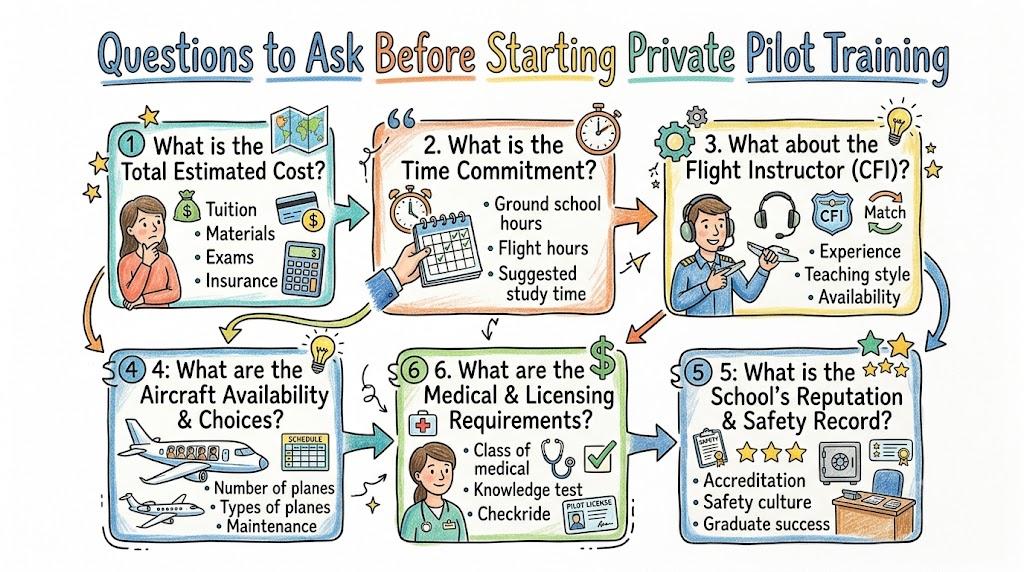
Before beginning private pilot training, it is essential to ask the right questions. Understanding what to expect allows you to make informed decisions, avoid common mistakes, manage your budget effectively, and enjoy a smoother training journey.
This guide explores the most important questions every future pilot should ask before enrolling in a private pilot training program.
Why Preparation Matters Before Flight Training
Flying an aircraft requires commitment, consistency, and careful planning. Preparing before enrollment helps students understand the demands of pilot training and increases the likelihood of completing the program successfully.
Proper preparation offers several benefits:
- Sets realistic expectations
- Helps create a practical budget
- Reduces training delays
- Improves learning efficiency
- Builds confidence before the first lesson
- Helps students choose the right flight school
- Supports long-term aviation goals
A well-informed student often progresses more smoothly through training than someone who begins without understanding the process.
Essential Questions to Ask Before Starting Private Pilot Training
1. Is the Flight School Properly Certified?
One of the first questions to ask is whether the flight school operates under the appropriate aviation regulations and follows established training standards.
A reputable flight school should:
- Follow national aviation regulations
- Maintain high safety standards
- Use approved training procedures
- Keep accurate student records
- Employ qualified instructors
Choosing a well-established school helps ensure quality education and professional training.
2. What Qualifications Do the Flight Instructors Have?
Your instructor will have a significant impact on your success as a pilot.
Ask about:
- Instructor certifications
- Teaching experience
- Total flight hours
- Experience training new students
- Communication style
- Student pass rates
A knowledgeable instructor who explains concepts clearly can make learning more enjoyable and efficient.
3. What Does the Training Program Include?
Not all training programs are identical.
Understand exactly what your course covers, including:
- Ground school
- Flight lessons
- Pre-flight briefings
- Post-flight reviews
- Navigation training
- Cross-country flying
- Emergency procedures
- Night familiarization (if applicable)
- Checkride preparation
Knowing what is included helps you compare programs more effectively.
4. How Much Does Private Pilot Training Cost?
Pilot training is a significant investment, so understanding the complete cost is essential.
Ask for a detailed breakdown that includes:
- Aircraft rental
- Flight instructor fees
- Ground school tuition
- Study materials
- Aviation headset (if required)
- Medical examination
- Written examination fees
- Practical test fees
- Fuel charges (if applicable)
Avoid choosing a school based solely on the lowest advertised price. A transparent cost estimate is often more valuable than a low initial quote.
5. How Long Will Training Take?
Training duration depends on several factors.
Ask about:
- Average completion time
- Weekly flight availability
- Weather delays
- Instructor scheduling
- Aircraft availability
- Student commitment
Students who train consistently usually complete their training more efficiently than those with long gaps between lessons.
6. What Aircraft Will I Train In?
Training aircraft play an important role in your learning experience.
Ask about:
- Aircraft models
- Fleet size
- Aircraft maintenance
- Modern avionics
- Safety equipment
- Aircraft availability
A well-maintained fleet reduces cancellations and provides a better learning environment.
7. How Often Should I Fly?
Consistency is one of the biggest factors affecting training success.
Many instructors recommend regular flight lessons because they help students:
- Retain skills
- Build confidence
- Reduce review time
- Progress more quickly
- Lower overall training costs
Flying too infrequently may increase both the time and cost required to complete training.
8. What Medical Requirements Must I Meet?
Most student pilots need to meet certain medical standards before solo flight and licensing.
Ask about:
- Medical certificate requirements
- Vision standards
- General health considerations
- Hearing requirements
- Medical examination process
Completing medical requirements early helps avoid unexpected delays later in training.
9. What Is the Student-to-Instructor Ratio?
Instructor availability affects scheduling flexibility.
Ask whether instructors have enough availability to support consistent training.
Benefits of good instructor availability include:
- Easier lesson scheduling
- Faster progress
- More personalized instruction
- Better continuity
Students benefit from working regularly with the same instructor whenever possible.
10. What Happens If I Need Extra Flight Hours?
Every student learns at a different pace.
Ask how the school handles:
- Additional flight lessons
- Extra practice sessions
- Additional instructor support
- Budget adjustments
Understanding this policy helps students plan both financially and academically.
11. What Safety Standards Does the School Follow?
Safety should always be a top priority.
Ask about:
- Aircraft inspections
- Maintenance schedules
- Instructor standardization
- Weather decision policies
- Emergency training
- Risk management procedures
A strong safety culture benefits every student.
12. What Support Is Available Outside Flight Lessons?
Learning continues beyond the cockpit.
Ask whether the school provides:
- Ground school assistance
- Study resources
- Online learning materials
- Practice examinations
- Instructor mentoring
- Student progress reviews
Additional learning support often improves overall training success.
Common Mistakes New Student Pilots Make
Choosing the Cheapest Flight School
Lower tuition does not always provide the best value.
Quality instruction, reliable aircraft, and strong student support often justify slightly higher costs.
Ignoring Instructor Experience
An experienced instructor helps students understand difficult concepts more efficiently.
Underestimating Training Costs
Unexpected expenses may include:
- Extra flight hours
- Additional study materials
- Examination fees
- Equipment purchases
Proper budgeting reduces financial stress.
Flying Too Infrequently
Long breaks between lessons often require additional review flights, increasing both time and cost.
Neglecting Ground School
Flying safely requires both practical skills and aviation knowledge.
Students who prepare well academically often perform better in the cockpit.
Delaying the Medical Examination
Completing the medical examination early helps identify any issues before significant training expenses are incurred.
Setting Unrealistic Expectations
Pilot training is rewarding but requires patience and dedication.
Progress varies from one student to another.
Poor Scheduling
Frequent cancellations or inconsistent lesson planning can slow overall progress.
Benefits of Asking the Right Questions
Researching your options before enrolling provides several advantages.
Better Flight School Selection
Students can compare training quality rather than relying solely on advertising.
Improved Financial Planning
Understanding all expected expenses reduces surprises during training.
Faster Learning
Choosing experienced instructors and maintaining consistent training schedules helps students progress more efficiently.
Greater Confidence
Knowing what to expect makes students more comfortable throughout training.
Enhanced Safety Awareness
Students who understand safety expectations develop better decision-making habits from the beginning.
Reduced Training Delays
Proper planning minimizes scheduling issues and unnecessary interruptions.
Higher Satisfaction
Well-informed students are more likely to enjoy the learning process and complete their training successfully.
Flight School Comparison Checklist
| Evaluation Factor | Why It Matters |
|---|---|
| School Certification | Demonstrates compliance with training standards |
| Instructor Experience | Improves learning quality |
| Aircraft Fleet | Supports reliable training |
| Maintenance Standards | Enhances safety |
| Training Costs | Helps create an accurate budget |
| Aircraft Availability | Reduces scheduling delays |
| Safety Culture | Builds pilot confidence |
| Ground School Quality | Strengthens aviation knowledge |
| Scheduling Flexibility | Supports consistent training |
| Student Reviews | Provides insight into training experiences |
Preparing for Your First Flight Lesson
Once you’ve selected the right flight school, preparing for your first lesson can help you feel more confident and make the most of your time in the cockpit.
Before your first flight:
- Bring any required identification and documents.
- Wear comfortable clothing suitable for the weather.
- Choose closed-toe shoes with good grip.
- Bring a notebook for taking notes.
- Stay hydrated and get adequate rest.
- Arrive early to meet your instructor.
- Be prepared to participate in a pre-flight aircraft inspection.
- Keep an open mind and don’t hesitate to ask questions.
Remember that your first lesson is designed to introduce you to basic flight operations and familiarize you with the aircraft, not to test your abilities.
Why FLIGHTTRAININGUS.COM Is a Valuable Aviation Resource
Starting flight training is a major decision, and having access to reliable educational resources can make the process less overwhelming. FLIGHTTRAININGUS.COM provides aspiring pilots with practical guidance on flight training, pilot education, aviation safety, flight school selection, and pilot career development. By offering informative resources and training insights, it helps future pilots make informed decisions before taking their first flight lesson.
Frequently Asked Questions
1. What questions should I ask before joining a flight school?
Ask about instructor qualifications, aircraft availability, training costs, safety standards, scheduling flexibility, medical requirements, and what is included in the training program.
2. How much does private pilot training usually cost?
The total cost varies depending on aircraft rental, instructor fees, flight hours, ground school, examination fees, equipment, and individual learning pace. Request a detailed estimate before enrolling.
3. How long does it take to earn a Private Pilot License?
Training duration depends on factors such as lesson frequency, weather conditions, instructor availability, and student progress. Consistent training generally leads to faster completion.
4. Do I need previous flying experience?
No. Most private pilot training programs are designed for complete beginners with no prior aviation experience.
5. Will I need a medical certificate?
Yes. Student pilots generally need to meet applicable medical requirements before solo flight and pilot certification. Completing the medical process early is recommended.
6. How many flight hours are typically required?
The required number of flight hours varies based on aviation regulations and individual progress. Many students complete more than the minimum hours as they build confidence and proficiency.
7. Can I train while working full-time?
Yes. Many flight schools offer flexible scheduling, allowing students to train during evenings, weekends, or other available times.
8. What aircraft are commonly used for training?
Many flight schools use reliable single-engine training aircraft equipped with standard flight instruments and, in some cases, modern glass cockpit avionics.
9. How do I choose the right flight instructor?
Look for instructors who have strong teaching skills, relevant experience, effective communication, and a supportive approach to student learning.
10. What can I do after earning a Private Pilot License?
A Private Pilot License allows you to fly for personal and recreational purposes. It also serves as the foundation for advanced ratings and certifications if you decide to pursue a professional aviation career.
Conclusion
Starting private pilot training is an exciting milestone, but choosing the right flight school requires careful planning and informed decision-making. Asking the right questions before enrolling helps you understand the training process, evaluate instructor qualifications, compare costs, assess safety standards, and determine whether a program aligns with your personal goals. Taking the time to research your options can save money, reduce training delays, and create a more enjoyable learning experience.
Whether you want to fly for recreation or use a Private Pilot License as the first step toward a professional aviation career, preparation is the key to success. By selecting a reputable flight school, committing to consistent training, and making use of trusted educational resources like FLIGHTTRAININGUS.COM, you can build a strong foundation for becoming a safe, confident, and knowledgeable pilot.
