
Introduction
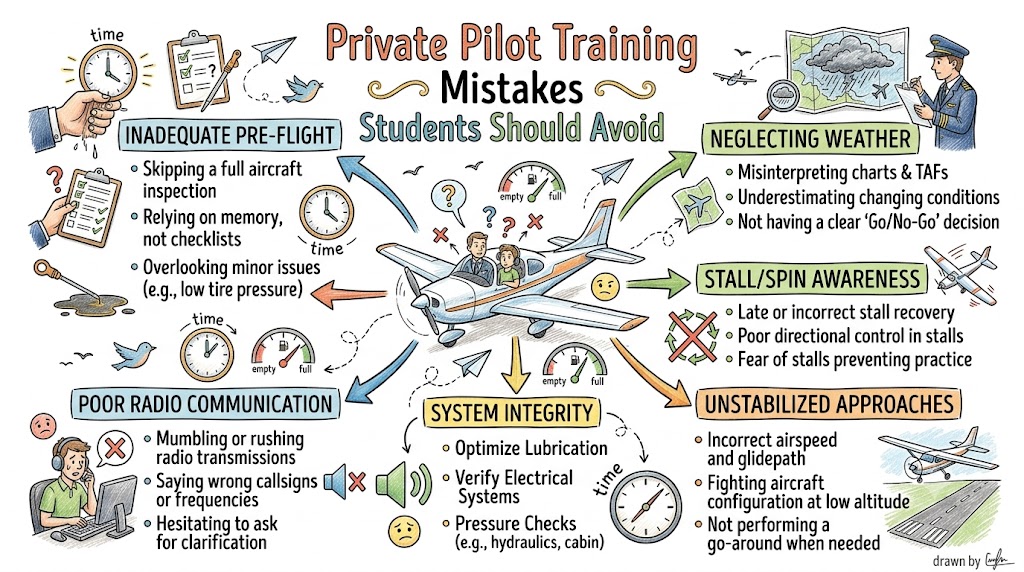
Learning to fly is an exciting and rewarding experience, but becoming a safe and confident pilot requires dedication, discipline, and consistent practice. During private pilot training, students gradually develop the knowledge, skills, and judgment needed to operate an aircraft safely. While making mistakes is a natural part of learning, recognizing and correcting common errors early can significantly improve training progress.
Many student pilots face similar challenges, such as arriving unprepared, overlooking ground study, skipping checklists, or rushing through lessons. These habits can slow learning and make flight training more difficult than necessary. Fortunately, with the right mindset and guidance from a qualified flight instructor, these mistakes can be avoided.
This guide explains the most common private pilot training mistakes students should avoid and provides practical tips to help aspiring pilots build strong habits, improve safety, and enjoy a successful flight training experience.
Understanding Private Pilot Training
Private pilot training combines classroom learning with practical flight instruction.
Students gradually develop skills in:
- Aircraft familiarization
- Flight controls
- Navigation
- Weather awareness
- Aviation regulations
- Communication
- Decision-making
- Flight safety
Every lesson builds upon previous knowledge and experience.
Mistake 1: Arriving Unprepared
Preparation plays a major role in successful flight training.
Students sometimes arrive without:
- Reviewing lesson material
- Bringing required documents
- Understanding lesson objectives
- Organizing training materials
Preparing before each lesson allows more time for learning in the aircraft.
Mistake 2: Skipping Ground Study
Flying requires more than practical skills.
Ground study helps students understand:
- Aircraft systems
- Aviation regulations
- Weather
- Navigation
- Aerodynamics
- Flight planning
Strong theoretical knowledge improves practical flying performance.
Mistake 3: Not Using Checklists
Checklists are one of the most important safety tools in aviation.
Students should consistently use:
Pre-Flight Checklist
Verify aircraft condition before every flight.
Before-Start Checklist
Prepare aircraft systems before engine start.
Before-Takeoff Checklist
Confirm aircraft readiness before departure.
Landing Checklist
Prepare for a safe approach and landing.
Post-Flight Checklist
Secure the aircraft after every lesson.
Using checklists consistently helps prevent missed procedures.
Mistake 4: Ignoring Instructor Feedback
Flight instructors provide valuable guidance throughout training.
Students improve faster when they:
- Listen carefully
- Accept constructive feedback
- Ask questions
- Apply corrections
- Review instructor comments
Feedback is an important part of continuous improvement.
Mistake 5: Becoming Overconfident
Confidence develops gradually through experience.
Overconfidence may lead students to:
- Rush procedures
- Skip checklists
- Underestimate weather
- Ignore limitations
Successful pilots balance confidence with sound judgment.
Mistake 6: Poor Communication
Clear communication improves both safety and learning.
Students should:
- Ask questions
- Listen carefully
- Practice radio communication
- Confirm instructions
- Communicate concerns openly
Good communication strengthens the instructor-student relationship.
Mistake 7: Neglecting Weather Planning
Weather influences every flight.
Students should learn to evaluate:
- Wind
- Visibility
- Cloud conditions
- Temperature
- Forecast changes
Weather awareness supports better flight planning and decision-making.
Mistake 8: Inconsistent Practice
Flying skills improve through regular repetition.
Long breaks between lessons may reduce:
- Skill retention
- Confidence
- Learning efficiency
Consistent practice helps students progress steadily.
Mistake 9: Rushing Progress
Some students focus too heavily on completing training quickly.
Learning aviation requires:
- Patience
- Practice
- Repetition
- Skill development
Building strong fundamentals creates safer pilots.
Mistake 10: Failing to Review Lessons
Learning continues after every flight.
Students should:
- Review instructor notes
- Reflect on mistakes
- Study lesson topics
- Prepare for the next lesson
Regular review strengthens long-term understanding.
Develop Good Pre-Flight Habits
Every successful flight begins before entering the cockpit.
Students should routinely:
- Review weather
- Inspect the aircraft
- Confirm fuel quantity
- Check required documents
- Review flight objectives
Preparation improves confidence.
Stay Organized Throughout Training
Organization helps reduce unnecessary stress.
Maintain:
- Flight logbook
- Study materials
- Checklists
- Lesson notes
- Training schedule
Good organization supports consistent learning.
Build Strong Cockpit Discipline
Cockpit discipline involves maintaining focus throughout every flight.
Important habits include:
- Following procedures
- Monitoring instruments
- Staying organized
- Avoiding distractions
- Prioritizing safety
These habits become automatic with experience.
Learn From Every Flight
Every lesson provides opportunities for improvement.
Ask yourself:
- What went well?
- What needs improvement?
- What should I study before the next lesson?
Reflection accelerates learning.
Best Practices for Student Pilots
Developing good habits early creates long-term success.
Study Regularly
Review aviation topics between lessons.
Stay Organized
Keep training materials easily accessible.
Practice Consistently
Regular lessons improve skill retention.
Use Checklists Every Time
Never rely solely on memory.
Listen Carefully
Instructor guidance helps build safe flying habits.
Ask Questions
Curiosity improves understanding.
Maintain a Safety Mindset
Safety should guide every aviation decision.
Benefits of Avoiding Common Training Mistakes
Good training habits provide lasting advantages.
Greater Confidence
Preparation reduces uncertainty.
Improved Safety
Consistent procedures support safe operations.
Faster Learning
Well-prepared students often progress more efficiently.
Better Decision-Making
Experience combined with proper instruction improves judgment.
More Enjoyable Training
Preparation allows students to focus on learning rather than correcting avoidable mistakes.
Strong Aviation Foundation
Good habits established early continue throughout a pilot’s aviation journey.
Student Pilot Training Checklist
Before Every Lesson:
- Review lesson material
- Check weather
- Bring required documents
- Wear appropriate clothing
- Arrive early
During Training:
- Use checklists
- Listen carefully
- Ask questions
- Follow procedures
- Stay focused
After Every Lesson:
- Review instructor feedback
- Study lesson topics
- Update training notes
- Prepare for the next lesson
Frequently Asked Questions
1. What are the most common private pilot training mistakes?
Common mistakes include arriving unprepared, skipping ground study, neglecting checklists, inconsistent practice, poor communication, and rushing through training.
2. Why is ground study important?
Ground study builds the knowledge needed to understand aircraft systems, regulations, weather, navigation, and flight planning.
3. How do checklists improve safety?
Checklists help ensure important procedures are completed consistently before, during, and after every flight.
4. How often should I practice?
Regular practice improves skill retention, confidence, and overall training progress.
5. Why should I listen to instructor feedback?
Instructor feedback identifies improvement areas and helps students develop safer flying techniques.
6. Is it normal to make mistakes during training?
Yes. Mistakes are a natural part of learning, provided students recognize them and continue improving.
7. How can I improve faster?
Prepare before lessons, practice consistently, study regularly, ask questions, and review every lesson afterward.
8. Why is weather planning important?
Understanding weather conditions helps students make informed decisions before every flight.
9. How should I prepare for each lesson?
Review lesson objectives, study aviation topics, organize documents, arrive early, and maintain a positive learning attitude.
10. What habits make successful student pilots?
Successful students stay organized, practice regularly, use checklists, communicate openly, study consistently, and always prioritize safety.
Conclusion
Private pilot training is a journey that requires patience, preparation, and continuous learning. While every student will make mistakes along the way, recognizing common training errors early allows them to develop better habits, improve safety, and build confidence more efficiently. By preparing thoroughly, listening to instructor feedback, studying consistently, practicing regularly, and maintaining a strong safety mindset, students create a solid foundation for successful flight training.
Every experienced pilot once faced the same learning challenges. The difference lies in a willingness to learn from mistakes, remain disciplined, and continue improving with every lesson. These habits not only help students earn their private pilot certificate but also prepare them for a lifetime of safe and responsible flying.
