
Introduction
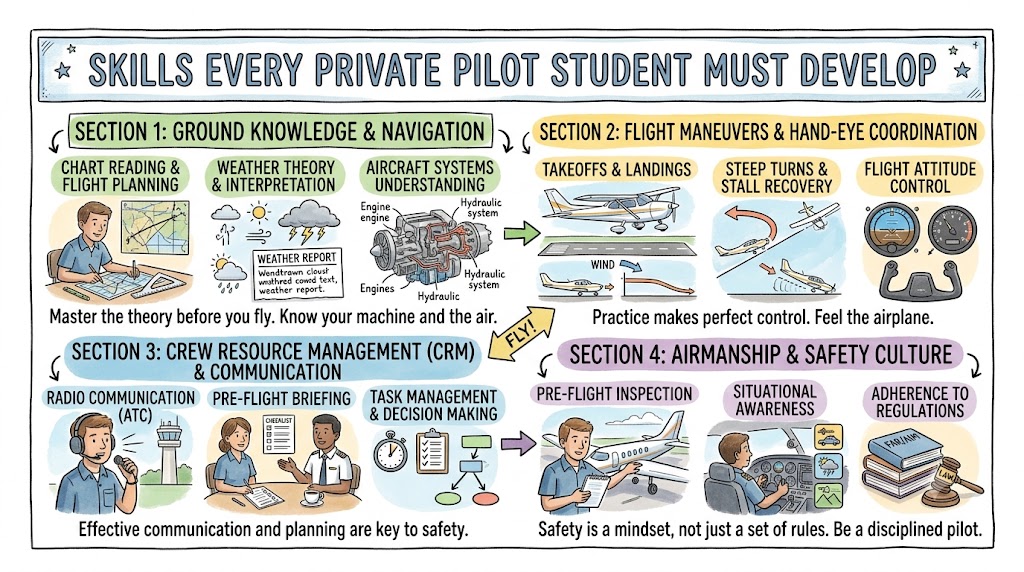
Learning to fly is one of the most rewarding journeys in aviation, but becoming a private pilot involves much more than learning how to control an aircraft. Safe and confident pilots develop a wide range of technical, mental, and communication skills that help them make sound decisions before, during, and after every flight.
Every lesson introduces new challenges, from understanding weather conditions and performing pre-flight inspections to communicating with instructors and maintaining situational awareness. While flying skills improve with practice, the habits developed during private pilot training often shape a pilot’s approach to aviation for years to come.
This guide explains the essential skills every private pilot student should develop, why each one is important, and how consistent practice can help build confidence, improve safety, and support long-term success in flight training.
Why Skill Development Matters
Flying an aircraft requires the ability to combine knowledge, practical techniques, and good judgment.
Developing the right skills helps students:
- Improve flight safety
- Build confidence
- Learn more efficiently
- Reduce stress during training
- Make better decisions
- Prepare for advanced flying
Every lesson becomes more valuable when students focus on improving both technical and personal skills.
Communication Skills
Clear communication is one of the most important abilities for every pilot.
Student pilots should learn to:
- Listen carefully to instructions
- Ask questions when unsure
- Communicate clearly with instructors
- Understand basic radio phraseology
- Follow standard aviation procedures
Good communication reduces misunderstandings and supports safer operations.
Situational Awareness
Situational awareness means understanding everything happening around the aircraft.
Pilots continuously monitor:
- Aircraft position
- Other aircraft
- Weather conditions
- Altitude
- Airspeed
- Terrain
- Airport activity
Maintaining awareness allows pilots to recognize potential hazards early.
Decision-Making Skills
Pilots regularly make decisions that affect flight safety.
Examples include:
- Evaluating weather conditions
- Determining fuel requirements
- Selecting alternate airports
- Deciding whether to continue or postpone a flight
- Responding to changing conditions
Good decisions are based on preparation, training, and careful evaluation rather than guesswork.
Aircraft Control Skills
Private pilot students gradually learn to control the aircraft smoothly and accurately.
Essential flight skills include:
Taxiing
Safe movement on the ground requires proper steering, braking, and awareness of surrounding aircraft.
Takeoff
Students learn:
- Runway alignment
- Acceleration control
- Rotation techniques
- Initial climb procedures
Straight-and-Level Flight
Maintaining stable flight teaches students how to balance attitude, altitude, and airspeed.
Turns
Coordinated turns require proper use of flight controls while maintaining aircraft balance.
Climbs and Descents
Students practice smooth altitude changes while maintaining safe airspeed.
Landing
Landing combines many skills developed throughout training and requires careful planning, coordination, and practice.
Pre-Flight Inspection Skills
Every safe flight begins with a thorough inspection.
Students learn how to examine:
- Fuel quantity and quality
- Oil levels
- Tires
- Flight controls
- Propeller
- Lights
- Aircraft documents
- Exterior condition
Developing a consistent inspection routine helps identify potential problems before takeoff.
Navigation Skills
Navigation involves more than following a route.
Private pilot students develop skills in:
- Airport orientation
- Visual navigation
- Reading aviation charts
- Understanding GPS systems
- Identifying landmarks
- Route planning
These abilities become increasingly important during cross-country training.
Time Management and Organization
Successful flight training requires effective planning.
Helpful habits include:
- Arriving early
- Reviewing lessons beforehand
- Keeping training materials organized
- Scheduling study time
- Maintaining a pilot logbook
Good organization supports consistent learning.
Study and Learning Skills
Flight training continues beyond the cockpit.
Students should:
- Review notes after lessons
- Read aviation materials
- Practice aviation terminology
- Study aircraft systems
- Prepare before each flight lesson
Consistent study often leads to faster progress.
Confidence and Emotional Control
Most student pilots experience nervousness during training.
Confidence develops gradually through:
- Regular practice
- Instructor guidance
- Learning from mistakes
- Positive preparation
- Patience
Remaining calm helps students absorb new information more effectively.
Safety Mindset
Professional pilots prioritize safety during every flight.
Students should develop habits such as:
- Using checklists
- Following procedures
- Respecting aircraft limitations
- Never rushing decisions
- Continuing to learn
A strong safety mindset remains valuable throughout a pilot’s career.
Weather Awareness
Understanding weather is an essential pilot skill.
Students should learn to recognize:
- Wind conditions
- Visibility
- Cloud formations
- Temperature effects
- Turbulence
- Changing weather patterns
Weather knowledge supports better flight planning and safer decision-making.
Problem-Solving Skills
Unexpected situations occasionally occur during flight training.
Students benefit from learning how to:
- Remain calm
- Analyze situations
- Follow procedures
- Prioritize safety
- Seek instructor guidance
Effective problem-solving develops with experience.
Attention to Detail
Small details often have significant importance in aviation.
Examples include:
- Completing checklists
- Monitoring instruments
- Confirming fuel levels
- Verifying aircraft configuration
- Reviewing weather information
Careful attention helps prevent avoidable errors.
Adaptability
Every flight is different.
Students should learn to adapt to:
- Changing weather
- Different instructors
- Various airports
- Aircraft characteristics
- Operational conditions
Flexibility improves overall flying ability.
Physical Coordination
Flying requires smooth coordination between hands, feet, and vision.
Students gradually improve:
- Control inputs
- Rudder coordination
- Instrument scanning
- Visual references
- Landing coordination
These skills improve with regular practice.
Common Mistakes Student Pilots Make
Many beginners experience similar challenges.
Examples include:
- Rushing procedures
- Poor communication
- Inadequate preparation
- Ignoring instructor feedback
- Becoming discouraged after mistakes
- Overconfidence
- Weak study habits
- Skipping checklist items
Recognizing these mistakes helps students improve more quickly.
Tips for Improving Pilot Skills Faster
Several habits support faster learning.
Fly Consistently
Regular lessons reinforce previously learned skills.
Review Every Lesson
Reflecting on instructor feedback helps identify areas for improvement.
Ask Questions
Curiosity strengthens understanding.
Practice Aviation Terminology
Familiarity with aviation language improves communication.
Use Flight Simulators
Simulation can reinforce procedures and cockpit familiarity between lessons.
Learn from Experienced Pilots
Observing experienced aviators provides valuable insights into good flying habits.
Benefits of Developing Strong Pilot Skills
Strong skills provide lasting advantages.
Safer Flying
Well-trained pilots make better operational decisions.
Greater Confidence
Preparation reduces anxiety during flight training.
Faster Learning
Students with good study habits often progress more efficiently.
Better Decision-Making
Experience and preparation improve judgment.
More Enjoyable Training
Confidence allows students to enjoy the learning process.
Long-Term Aviation Success
The habits developed during private pilot training support future aviation achievements.
Private Pilot Skill Development Checklist
Technical Skills:
- Aircraft control
- Navigation
- Radio communication
- Pre-flight inspection
- Weather awareness
Personal Skills:
- Decision-making
- Time management
- Organization
- Confidence
- Emotional control
Safety Habits:
- Use checklists
- Follow procedures
- Monitor surroundings
- Continue learning
- Accept instructor feedback
Frequently Asked Questions
1. What skills are most important for private pilot students?
Communication, aircraft control, situational awareness, decision-making, navigation, and maintaining a strong safety mindset are among the most important skills.
2. How can I improve communication during flight training?
Listen carefully, ask questions, practice aviation terminology, and become familiar with standard radio communication procedures.
3. Why is situational awareness important?
Situational awareness helps pilots recognize changing conditions, monitor traffic, avoid hazards, and make safer operational decisions.
4. How do pilots make safe decisions?
Safe decisions result from proper planning, weather evaluation, aircraft knowledge, training, and careful assessment of available information.
5. What should I study before each lesson?
Review previous lesson notes, aircraft systems, flight procedures, aviation terminology, and the objectives for the upcoming lesson.
6. How can I become more confident?
Confidence develops through consistent practice, preparation, instructor guidance, and learning from each flight experience.
7. What mistakes should beginners avoid?
Avoid rushing procedures, neglecting preparation, ignoring feedback, skipping checklists, and becoming discouraged by normal learning challenges.
8. How often should I practice?
Regular practice supports skill retention and helps students progress more efficiently through flight training.
9. Why are checklists important?
Checklists help ensure important procedures are completed consistently while reducing the chance of human error.
10. How long does it take to develop strong flying skills?
Skill development varies with lesson frequency, preparation, individual learning pace, and consistent practice. Improvement continues throughout a pilot’s aviation journey.
Conclusion
Developing strong pilot skills is the foundation of safe and successful private pilot training. While learning to control an aircraft is an important milestone, equally valuable skills such as communication, situational awareness, decision-making, preparation, organization, and maintaining a safety-first mindset help shape responsible and confident pilots. Every lesson provides an opportunity to strengthen these abilities, and steady practice allows students to build lasting confidence both in the cockpit and on the ground.
Whether your goal is recreational flying or continuing toward advanced aviation certifications, investing time in developing these essential skills will help create a strong foundation for a lifetime of safe and enjoyable flying.
