
Introduction
A Private Pilot License, commonly called a PPL, is one of the most important milestones for anyone who wants to learn to fly. It allows a trained pilot to operate an aircraft for personal and recreational purposes under approved rules. For many aviation beginners, a Private Pilot License is the first serious step toward flying independently, carrying passengers, building aviation knowledge, and gaining confidence in the cockpit.
Private pilot training teaches students how aircraft work, how to plan flights, how to communicate with air traffic control, how to understand weather, and how to make safe decisions before and during flight. Some students pursue a PPL for weekend flying, personal travel, or aircraft ownership. Others use it as the foundation for advanced ratings and a future aviation career. Whether your goal is recreation or professional growth, understanding what a Private Pilot License is and who needs it can help you choose the right training path.
Real-world Use Cases
A hobby flyer may want a Private Pilot License to enjoy recreational flying, visit nearby airports, or take short personal trips. For this type of learner, the PPL offers freedom, confidence, and a structured way to fly safely.
A student planning an aviation career may begin with a PPL before moving toward instrument training, commercial pilot training, and instructor certification. A parent researching flight school options for their child may see the Private Pilot License as a strong introduction to discipline, responsibility, and aviation knowledge.
A working professional may explore PPL training as a personal goal or career change. A private aircraft owner may need a license to fly their aircraft independently. A beginner comparing pilot certificates may choose a PPL because it offers broader privileges than basic recreational options.
Evaluation Criteria for Understanding Private Pilot License Training
Before starting private pilot training, students should evaluate:
- Personal flying goals
- Training budget
- Flight school quality
- Instructor experience
- Aircraft availability
- FAA private pilot license requirements
- Medical eligibility
- Ground school support
- Lesson scheduling flexibility
- Written exam preparation
- Checkride readiness
- Long-term aviation plans
Understanding these factors helps students decide whether a Private Pilot License is the right fit.
What Is a Private Pilot License?
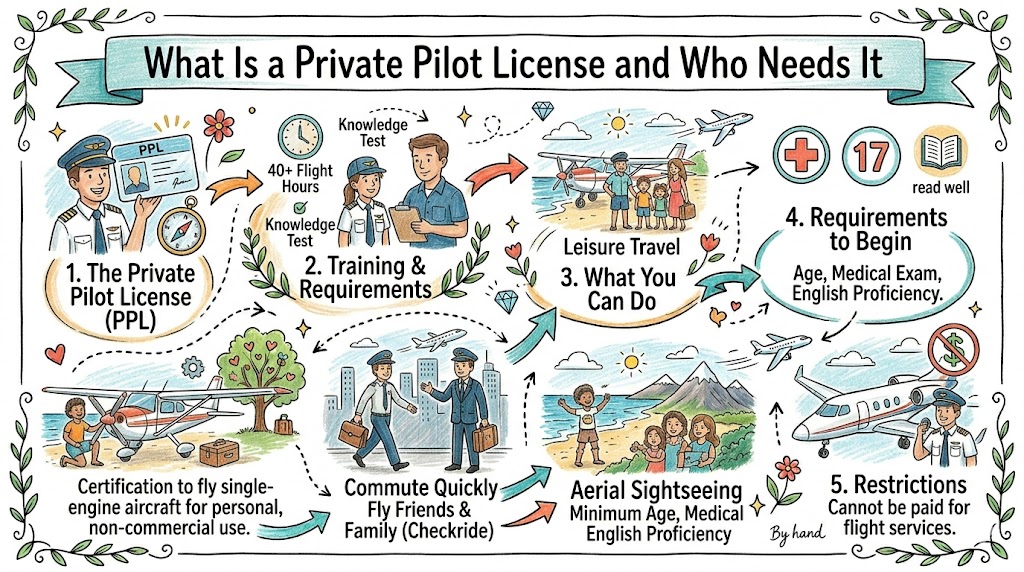
A Private Pilot License is a pilot certificate that allows a person to fly an aircraft for personal use after completing required training, exams, and practical testing. It is one of the most common pilot licenses for aviation beginners.
A PPL is not designed for paid flying work. Instead, it gives pilots the ability to fly for recreation, personal transportation, and aviation experience. For example, a pilot with a PPL may fly with family or friends under allowed rules, but cannot work as a paid commercial pilot using only a private pilot license.
What Does a PPL Allow You to Do?
A Private Pilot License gives pilots several important privileges. It allows them to fly approved aircraft, carry passengers under allowed conditions, travel cross-country, and continue training toward advanced aviation goals.
For example, a licensed private pilot may fly to another city for a weekend trip, take family members on a scenic flight, or build flight experience before pursuing an instrument rating. The PPL gives pilots practical freedom while still requiring responsibility and safety awareness.
Who Needs a Private Pilot License?
A Private Pilot License is useful for anyone who wants to fly independently beyond basic introductory lessons. It is especially helpful for recreational pilots, aircraft owners, aviation students, and people who want a stronger foundation in flight training.
For example, a person who only wants to experience one discovery flight does not need a PPL. But someone who wants to fly regularly, carry passengers, rent aircraft, or build toward a professional aviation career will usually need private pilot training.
Basic Eligibility Requirements
Students must meet basic eligibility requirements before earning a Private Pilot License. These requirements usually include minimum age, English language ability, flight training completion, ground knowledge, and instructor endorsements.
A beginner does not need previous aviation experience to start training. Flight schools teach students step by step, beginning with basic aircraft control, safety procedures, aviation rules, and communication skills.
FAA Medical Certificate Requirements
Most students pursuing a Private Pilot License need an FAA medical certificate. This helps confirm that the student meets the required medical standards for safe aircraft operation.
The medical exam may review vision, hearing, general health, medical history, and other safety-related factors. Students should complete this step early so they can confirm eligibility before investing heavily in flight lessons.
Ground School Requirements
Ground school teaches the knowledge needed to become a safe and informed pilot. It prepares students for the FAA written exam and helps them understand what they practice during flight lessons.
Ground school topics often include:
- Aircraft systems
- Aerodynamics
- Weather
- Navigation
- Airspace rules
- Flight planning
- Radio communication
- Regulations
- Aircraft performance
- Emergency procedures
For example, before a student plans a cross-country flight, ground school helps them understand route planning, weather review, fuel needs, and airport procedures.
Flight Training Requirements
Flight training is the hands-on part of private pilot training. Students fly with a certified flight instructor and gradually learn how to operate an aircraft safely.
Flight lessons usually include:
- Pre-flight inspection
- Taxiing
- Takeoffs
- Climbs and descents
- Turns
- Slow flight
- Stalls
- Emergency procedures
- Landings
- Navigation practice
- Radio communication
For example, a beginner may first learn basic aircraft control, then progress toward traffic pattern work, landings, solo flight, and cross-country navigation.
Solo Flight Training
Solo flight is one of the most memorable milestones in PPL training. Before flying solo, a student must demonstrate safe aircraft handling, basic emergency knowledge, landing ability, and good judgment.
An instructor will only authorize solo flight when the student is ready. For example, if a student can consistently take off, fly the traffic pattern, communicate clearly, and land safely, the instructor may approve the first supervised solo stage.
Cross-Country Flight Training
Cross-country flight training teaches students how to plan and complete flights beyond the local airport area. This includes navigation, fuel planning, weather decisions, airport selection, and communication with air traffic services when needed.
For example, a student may plan a flight from one airport to another, review weather conditions, calculate fuel requirements, and practice navigation during the trip. This builds real-world flying confidence.
FAA Written Exam
The FAA written exam tests aviation knowledge learned in ground school. It covers important topics such as weather, airspace, aircraft performance, regulations, navigation, and flight planning.
Students should prepare with consistent study, practice questions, instructor guidance, and review sessions. Passing the written exam is an important step toward completing the Private Pilot License process.
Practical Checkride
The checkride is the final practical test for earning a Private Pilot License. It includes an oral exam and a flight test with an examiner.
During the oral portion, students answer questions about flight planning, weather, aircraft systems, regulations, and safety decisions. During the flight portion, students demonstrate aircraft control, maneuvers, takeoffs, landings, navigation, and emergency procedures.
Cost and Budgeting for PPL Training
The cost of PPL training can vary based on flight school, aircraft rental rates, instructor fees, location, lesson frequency, study habits, and training consistency.
Common cost areas include:
- Aircraft rental
- Instructor fees
- Ground school
- Training materials
- Medical exam
- FAA written exam
- Checkride fee
- Pilot supplies
- Extra practice lessons
Students should ask for a realistic total estimate rather than focusing only on hourly rates. Consistent training can also help reduce repeated lessons and unnecessary cost.
Training Timeline
The time needed to earn a Private Pilot License depends on weather, aircraft availability, instructor scheduling, student preparation, and how often the student flies.
A full-time student may progress faster, while a part-time student may take longer because of work, school, or family responsibilities. The most important goal is not speed, but safe and confident readiness.
Private Pilot License vs Sport Pilot Certificate
A Sport Pilot Certificate is often simpler and may suit students who want lighter recreational flying with more limitations. It may involve fewer privileges than a Private Pilot License.
A Private Pilot License offers broader flying privileges and is usually a stronger foundation for students who want more flexibility, advanced ratings, or a future aviation career. For example, someone planning long-term aviation growth may choose the PPL path.
Private Pilot License vs Commercial Pilot License
A Private Pilot License allows personal and recreational flying, while a Commercial Pilot License allows pilots to be paid for certain flying work after completing advanced training and meeting additional requirements.
Most professional pilots begin with a PPL before moving toward instrument, commercial, and instructor ratings. The PPL builds the basic knowledge and cockpit skills needed for later training stages.
Recreational Flying vs Professional Pilot Training
Recreational flying focuses on personal enjoyment, weekend trips, scenic flights, and aviation as a hobby. A Private Pilot License is often enough for this type of flying.
Professional pilot training requires more advanced licenses, ratings, flight hours, and experience. A student who wants an aviation career can use the PPL as the first step toward commercial pilot training.
Full-Time vs Part-Time PPL Training
Full-time PPL training allows students to fly more frequently, build momentum, and complete lessons faster when aircraft and instructor availability are strong.
Part-time training works well for students who are balancing work, school, or family commitments. It may take longer, but with consistent scheduling and preparation, part-time students can still succeed.
Benefits of Earning a Private Pilot License
A Private Pilot License helps students:
- Fly recreationally
- Carry passengers under allowed rules
- Build aviation confidence
- Understand aircraft systems and safety
- Improve decision-making
- Prepare for advanced ratings
- Begin a professional aviation pathway
- Enjoy greater personal freedom in flying
- Develop discipline and responsibility
- Gain real flight planning experience
For many aviation learners, earning a PPL is both a personal achievement and a gateway to future opportunities.
Next Steps After Earning a PPL
After earning a Private Pilot License, pilots can continue building experience or pursue additional aviation training.
Common next steps include:
- Instrument rating
- Commercial pilot training
- Multi-engine training
- Flight instructor training
- Advanced cross-country flying
- Aircraft rental or ownership
- Aviation career planning
The PPL is not the end of the aviation journey. It is a strong foundation for continued growth.
Practical Tips for Private Pilot License Students
Decide Whether You Really Need a PPL
Think about your flying goals. If you want to fly regularly, carry passengers, rent aircraft, or prepare for advanced training, a Private Pilot License may be the right choice.
Choose the Right Flight School
Compare flight schools based on instructor quality, aircraft condition, safety culture, scheduling, cost transparency, and student support.
Prepare for Ground School Early
Do not wait until the end of training to study. Ground school knowledge helps you understand flight lessons better and prepares you for the written exam.
Manage Training Costs Carefully
Ask for a full cost estimate and plan for extra practice time. Flying consistently can help reduce repeated lessons and control costs.
Stay Consistent During Lessons
Frequent lessons help students retain skills and progress more efficiently. Long gaps between flights can slow learning and increase review time.
Build Confidence Before Solo Flight
Solo flight should not be rushed. Confidence comes from preparation, repetition, instructor feedback, and safe decision-making.
Prepare for the FAA Written Exam
Use ground school materials, practice tests, and instructor guidance. Study regularly instead of waiting until the last moment.
Plan Your Next Steps After the PPL
Decide whether your goal is recreational flying, advanced ratings, aircraft ownership, or commercial pilot training. A clear plan helps you stay motivated.
Common Mistakes Beginners Should Avoid
- Choosing a flight school only by price
- Delaying the medical exam
- Flying too inconsistently
- Ignoring ground school
- Underestimating total training cost
- Comparing progress with other students
- Skipping lesson preparation
- Not asking questions
- Rushing solo flight readiness
- Treating the PPL as only a certificate instead of a safety foundation
Avoiding these mistakes helps students train more smoothly and confidently.
FAQs
1- What is a Private Pilot License?
A Private Pilot License is a pilot certificate that allows a trained pilot to fly aircraft for personal and recreational purposes under approved rules. It is one of the most common starting points for aviation beginners.
2- Who needs a PPL?
A PPL is useful for people who want to fly independently, carry passengers under allowed rules, rent aircraft, own an aircraft, or prepare for advanced aviation training.
3- What are the basic PPL eligibility requirements?
Students generally need to meet age, language, training, medical, knowledge, and practical test requirements. A flight school can explain the exact pathway based on the student’s goals.
4- Do I need an FAA medical certificate?
Most private pilot students need an FAA medical certificate. Completing the medical exam early helps confirm eligibility before spending heavily on training.
5- How much does private pilot training cost?
Costs vary based on school, aircraft rental rates, instructor fees, location, study habits, and lesson frequency. Students should request a full estimate that includes exams, supplies, and extra practice time.
6- How long does it take to earn a PPL?
The timeline depends on weather, aircraft availability, instructor scheduling, and how often the student trains. Consistent students usually progress faster than those with long gaps between lessons.
7- What is ground school?
Ground school teaches aviation theory, rules, weather, navigation, aircraft systems, flight planning, and safety procedures. It prepares students for the FAA written exam and practical flying.
8- When can a student fly solo?
A student can fly solo only when the instructor confirms readiness and provides the required authorization. The student must demonstrate safe aircraft control, good judgment, and emergency knowledge.
9- Is the FAA written exam difficult?
The FAA written exam requires preparation, but it is manageable with consistent study, ground school, practice questions, and instructor support.
10- Can a PPL lead to an aviation career?
Yes. A PPL is often the first step toward instrument training, commercial pilot training, multi-engine training, and flight instructor certification. It creates the foundation for professional aviation growth.
Conclusion
A Private Pilot License is a valuable starting point for anyone who wants to learn to fly with confidence, safety, and independence. It gives aviation beginners the skills, knowledge, and privileges needed for recreational flying, personal travel, passenger flights under allowed rules, and future training opportunities. Whether you are a hobby flyer, student, parent, aircraft owner, or career changer, understanding what a PPL offers helps you decide if it matches your goals. With the right flight school, consistent training, early preparation, and a safety-first mindset, private pilot training can become a rewarding step toward long-term aviation growth.
