
Introduction
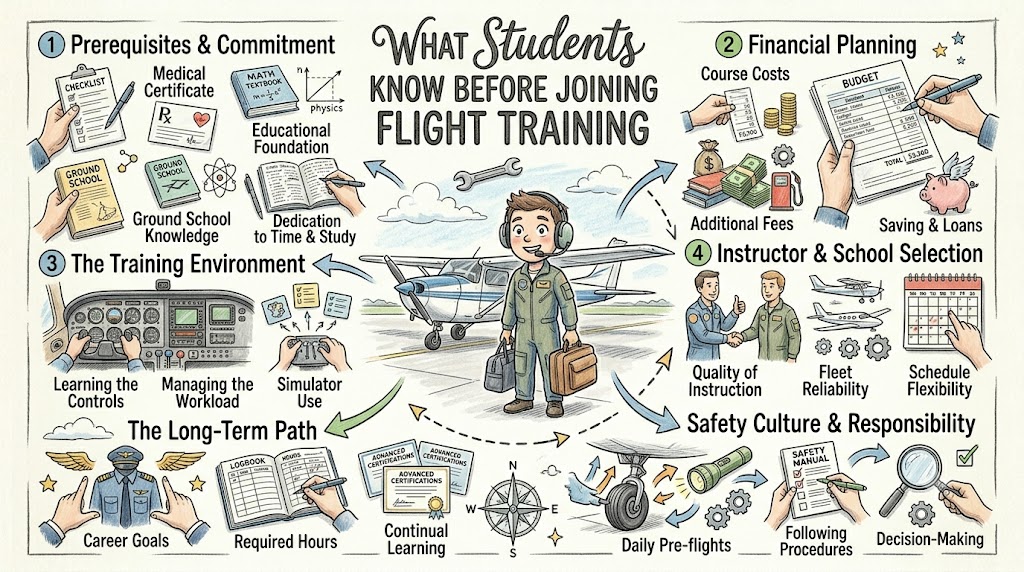
Flight training is an exciting step for anyone aspiring to become a professional pilot. It opens doors to a rewarding aviation career, offering the opportunity to fly commercially, privately, or in specialized roles. However, flight training is also a significant commitment that requires preparation, focus, and understanding of both the technical and lifestyle demands of the profession. Students who enter training without proper knowledge can face unexpected challenges, increased costs, or delays in their progress.
Understanding what to expect before joining flight school helps students make informed decisions and sets a strong foundation for success. By preparing academically, financially, and physically, aspiring pilots can approach training with confidence and clarity.
Why Preparation Matters
Preparation is essential for a smooth flight training experience. Being ready in advance helps students:
- Understand the demands of training
- Plan for financial costs
- Meet physical and mental requirements
- Align personal goals with career pathways
- Build awareness of safety and responsibility
- Commit to the long-term learning process
Well-prepared students are more likely to progress efficiently, handle challenges, and gain the skills needed for a successful aviation career.
Eligibility and Prerequisites
Before joining flight training, students should know the typical requirements:
- Age and Education: Most flight schools require a minimum age and a high school diploma or equivalent. Some programs prefer or require college coursework.
- Language Skills: Proficiency in English is essential for communication, navigation, and regulatory compliance.
- Medical Certification: Students must obtain a medical certificate verifying fitness for flight. Vision, hearing, and general health standards are assessed.
- Background Checks: Some programs may require security or background checks depending on the regulatory environment.
Meeting these prerequisites ensures students are eligible for both training and licensing exams.
Physical and Mental Requirements
Aviation demands both physical and mental readiness. Flight training requires:
- Aeromedical Fitness: Healthy vision, hearing, and overall physical condition.
- Physical Stamina: Ability to handle extended flight sessions and simulator training.
- Decision-Making Skills: Quick judgment and problem-solving under pressure.
- Situational Awareness: Awareness of the aircraft, environment, and operational conditions.
- Emotional Resilience: Ability to handle stress, setbacks, and challenging learning scenarios.
Students who maintain good health and develop cognitive skills are better prepared to succeed.
Financial Considerations
Flight training can be a considerable investment. Students should account for:
- Tuition fees for ground school and flight instruction
- Aircraft rental or flight hour costs
- Examinations, licensing fees, and certifications
- Study materials, books, and supplies
- Medical and insurance requirements
- Potential relocation or travel expenses
Researching costs and exploring financing, scholarships, or payment plans can help students plan effectively.
Commitment and Time Management
Flight training requires a dedicated schedule. Students should expect:
- Weekly flight hours and simulator sessions
- Ground school study and exams
- Weather-dependent adjustments and delays
- Consistent personal study and practice
Effective time management ensures progress without burnout and helps balance training with other responsibilities.
Expected Skills and Knowledge
During training, students will develop:
- Aircraft Handling: Mastery of takeoff, landing, maneuvers, and control
- Navigation and Communication: Using charts, GPS, radios, and air traffic control procedures
- Meteorology and Airspace Regulations: Understanding weather patterns, airspace rules, and safety protocols
- Emergency Procedures: Responding to engine failures, system alerts, and in-flight challenges
- Flight Planning and Fuel Management: Calculating routes, fuel requirements, and contingencies
- Instrument Flying: Operating under limited visibility using cockpit instruments
- Decision-Making Under Pressure: Applying knowledge to real-time flight scenarios
These skills form the foundation for all future pilot certifications.
Certifications and Career Pathways
Flight training typically progresses through multiple certifications:
- Private Pilot License (PPL): The first step toward professional flying
- Instrument Rating (IR): Enables safe flight in low-visibility conditions
- Commercial Pilot License (CPL): Allows students to be compensated as pilots
- Multi-Engine Rating (ME): Prepares students to operate more complex aircraft
- Certified Flight Instructor (CFI): Optional step for building experience
- Airline Transport Pilot License (ATPL): Required for airline captain roles
- Specialized Endorsements: Tailwheel, seaplane, or type ratings for specific operations
Understanding the certification pathway helps students set realistic goals and plan for the long-term career trajectory.
Lifestyle Considerations
Flight training can affect lifestyle and daily routines. Students should consider:
- Irregular Schedules: Flights, weather delays, and simulator sessions may occur at various hours
- Travel or Relocation: Some programs require living near the flight school
- Stress and Workload: Balancing ground school, flight hours, and personal commitments
- Social Balance: Dedication to training may affect social life
- Long-Term Commitment: Piloting is a career that demands ongoing learning, recurrent training, and professional growth
Being aware of these factors helps students make informed lifestyle decisions.
Tips for Students Before Joining
Practical advice for aspiring pilots includes:
- Research flight schools thoroughly, including instructor experience and aircraft fleet
- Understand the full cost and available financing options
- Obtain a medical checkup before enrollment
- Prepare academically and mentally for ground and flight training
- Attend introductory flights or orientation sessions
- Ask questions about training aircraft, schedules, and expectations
- Connect with current students or alumni for insights
- Assess personal motivation, career goals, and commitment level
A proactive approach improves readiness and confidence.
FAQs
1- What is the minimum age to start flight training?
Most schools require students to be at least 16 to start private pilot training, though age requirements may vary by program and country.
2- Do I need a college degree to become a pilot?
A college degree is not always required for initial flight training, but it may be beneficial for airline career paths or advanced positions.
3- How much does flight training typically cost?
Costs vary by aircraft type, flight hours, school, and location. Students should budget for tuition, aircraft rental, exams, and materials.
4- What medical requirements must I meet?
Students must obtain an FAA or local aviation medical certificate. Vision, hearing, and overall health are assessed to ensure safety in flight.
5- How long does it take to earn a private pilot license?
Completion time depends on training frequency, weather, student progress, and school scheduling. Consistent practice helps accelerate progress.
6- Can flight training be done part-time?
Yes, part-time training is possible, though progress may be slower. Scheduling consistency is key to retaining skills and knowledge.
7- What skills are most important for new students?
Aircraft control, navigation, communication, situational awareness, decision-making, and emergency preparedness are essential skills.
8- Are scholarships or financing options available?
Many flight schools offer financing plans or scholarships. Students should research options and plan finances before enrollment.
9- Do students need prior aviation experience?
No prior experience is required for most flight training programs, though familiarity with basic physics and math can help.
10- What career paths are available after flight training?
Graduates can pursue commercial airline, corporate, charter, cargo, flight instruction, or specialized aviation roles depending on certifications and experience.
Conclusion
Flight training is a challenging and rewarding pursuit that requires careful preparation and commitment. Students should understand prerequisites, physical and mental requirements, financial implications, time commitments, and the skills they will develop. Knowing the certification pathway and potential career options helps align expectations and goals. By researching flight schools, obtaining medical clearance, preparing academically, and understanding lifestyle considerations, aspiring pilots can approach training with confidence. Being well-informed before enrollment increases the likelihood of success, safety, and long-term career satisfaction in the aviation industry.
