
Introduction
Becoming a pilot in the United States is a dream shared by many aviation enthusiasts, hobbyists, and aspiring professionals. Flying offers the thrill of controlling an aircraft, the freedom of personal travel, and opportunities for a rewarding career. However, for beginners, the process of becoming a pilot can feel overwhelming, with multiple licensing options, FAA regulations, flight school choices, and training requirements to consider.
This guide is designed to help beginners navigate the path to earning their FAA pilot certifications. From understanding the necessary licenses and medical requirements to selecting a flight school and logging flight hours, we’ll cover the essential steps for starting your journey toward becoming a pilot in America.
Real-World Use Cases
Starting pilot training in the USA benefits a wide variety of individuals:
- Aspiring airline pilots completing foundational training and flight hours
- Hobbyists pursuing recreational flying for personal enjoyment
- Flight school students building experience for certification programs
- Career changers entering the aviation industry from other professions
- Students preparing for commercial pilot licenses
- Military veterans transitioning to civilian aviation careers
- International students seeking FAA-recognized licenses
- Corporate aviation trainees aiming for executive travel roles
- Part-time students pursuing private pilot certification
- Pilots building experience for instructor or airline roles
Evaluation Criteria for Beginner Pilots
When starting your pilot training journey, consider these factors:
- FAA-approved flight school and certification programs
- Instructor experience and student-to-instructor ratio
- Availability and condition of training aircraft
- Simulator technology and training resources
- Scheduling flexibility and course structure
- Training costs and financing options
- Location and variety of airspace for practical training
- Student support services and housing
- Career guidance and airline pathway programs
- Regulatory compliance and record-keeping standards
Best for
This guide is best for beginners, aviation enthusiasts, hobbyists, and career changers who want a clear, structured approach to obtaining FAA pilot certifications and building flight experience in the USA.
Not Ideal for
This guide is not suitable for individuals seeking non-U.S. licenses, casual recreational flying without formal training, or unregulated flight experiences. It focuses on structured, FAA-approved pathways for a professional or serious recreational pilot career.
Beginner Pilot Training Pathways
Private Pilot License (PPL)
The PPL is the entry-level license allowing individuals to fly solo or carry passengers for non-commercial purposes. Requirements typically include 40-50 flight hours, ground school, and passing FAA written and practical exams.
Recreational Pilot License (RPL)
An RPL allows limited flying privileges for hobbyists, typically requiring fewer flight hours and restricting distance, airspace, and passenger limitations.
Instrument Rating
An Instrument Rating allows pilots to fly under Instrument Flight Rules (IFR), enhancing safety and enabling flight in varied weather conditions.
Commercial Pilot License (CPL)
A CPL permits professional and paid flying. It requires advanced training, multi-engine experience, and additional flight hours, preparing students for airline or charter operations.
Certified Flight Instructor (CFI)
CFI certification enables pilots to teach others and log flight hours, providing a pathway to build experience toward higher certifications.
Airline Transport Pilot (ATP)
The ATP license is the highest level of certification, required for airline captains and advanced operations. It demands significant flight experience and advanced theoretical knowledge.
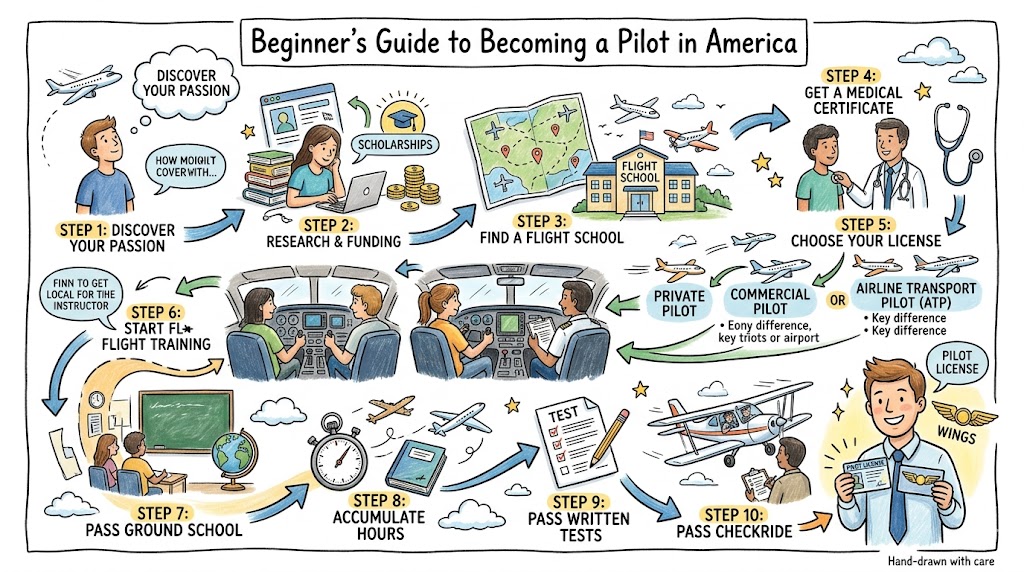
Steps to Start Pilot Training in the USA
- Research FAA-approved flight schools and choose one that fits your goals
- Complete medical certification and student pilot requirements
- Enroll in ground school for theory and navigation knowledge
- Begin flight training with an instructor, logging required flight hours
- Pass FAA written, oral, and practical exams for your license
- Progress to instrument, commercial, or instructor certifications as needed
- Accumulate experience hours for career advancement
- Apply for airline, corporate, or charter aviation roles
- Maintain continuing education and recurrent training to stay current
Comparison Table: Pilot Certifications for Beginners
| Certification | Purpose | Required Flight Hours | Privileges |
|---|---|---|---|
| Private Pilot License | Personal and recreational flying | ~40-50 hours | Fly solo, carry passengers |
| Recreational Pilot License | Hobbyist flying | ~30 hours | Limited distance and passengers |
| Instrument Rating | IFR and weather navigation | Varies | Fly in poor weather conditions |
| Commercial Pilot License | Professional flying | ~250 hours | Paid flying, commercial operations |
| Certified Flight Instructor | Teaching and logging hours | Varies | Instructor privileges |
| Airline Transport Pilot | Airline captain | ~1,500 hours | Commercial airline operations |
Tips for Beginner Pilots
- Choose a reputable FAA-approved flight school
- Obtain medical certification early
- Invest time in ground school and simulator training
- Log flight hours carefully and maintain accurate records
- Ask instructors about career pathways and advancement
- Prioritize safety and regulatory compliance
- Explore different aircraft types and multi-engine training
- Network with other students and professional pilots
- Plan finances for training costs and living expenses
- Stay updated on FAA regulations and training requirements
Common Mistakes to Avoid
- Selecting a flight school based solely on cost
- Skipping medical certification requirements
- Neglecting ground school study
- Failing to log flight hours accurately
- Rushing to advanced certifications without adequate experience
- Ignoring safety and maintenance protocols
- Not researching career opportunities after training
- Overlooking airport and airspace familiarity
- Delaying instrument and advanced training
- Ignoring networking and mentorship opportunities
Frequently Asked Questions
- How do I start pilot training in the USA?
Choose an FAA-approved flight school, obtain a student medical certificate, and enroll in ground and flight training programs. - What is the first license I should obtain?
Beginners typically start with a Private Pilot License (PPL) or Recreational Pilot License (RPL). - How many flight hours are required for a PPL?
Usually 40-50 hours, including solo and dual instruction. - Do I need a medical certificate to train?
Yes, a student pilot medical certificate is mandatory. - What costs are involved in pilot training?
Costs vary depending on flight school, aircraft, instructor, and certification level. - Can international students train in the USA?
Yes, with student visas and enrollment in FAA-approved programs. - What is the difference between PPL and RPL?
RPL is more limited in distance and passenger capacity than PPL. - How long does it take to become a commercial pilot?
Completing a CPL usually requires 200-250 flight hours. - What is the importance of simulators?
Simulators allow instrument, emergency, and procedural training safely. - Can I become a flight instructor as a beginner?
After earning a CPL and sufficient flight experience, you can pursue CFI certification.
Conclusion
Becoming a pilot in America offers structured, FAA-approved pathways for beginners, combining practical flight experience, theoretical knowledge, and clear career progression. By understanding licenses, training requirements, and best practices, aspiring pilots can successfully navigate their journey from first flight lesson to advanced certifications. With careful planning, dedication, and guidance, beginners can enjoy safe, efficient, and rewarding aviation experiences in the United States.
