
Introduction
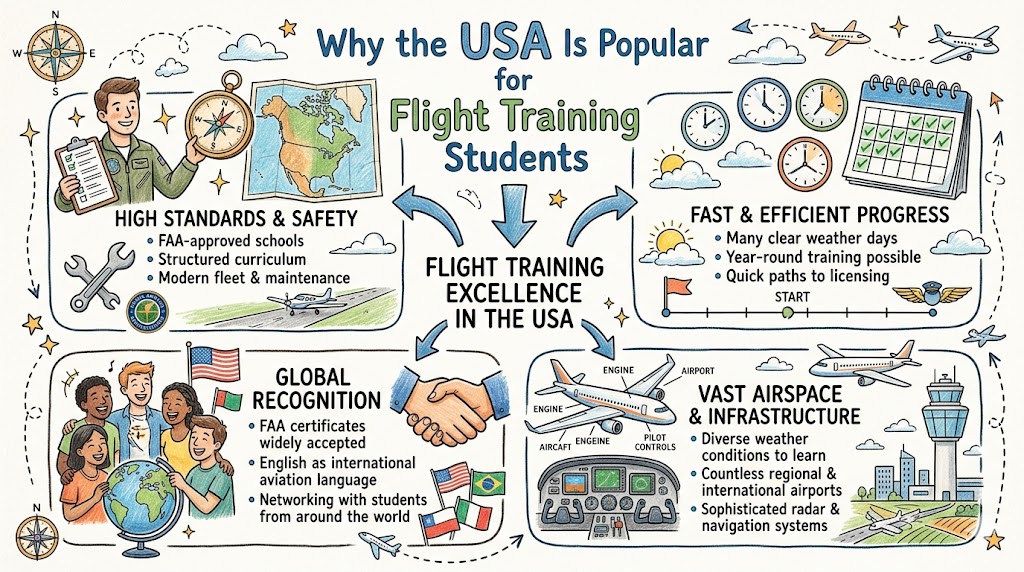
The United States has long been a leading destination for aspiring pilots from around the world. With its wide range of flight schools, FAA-approved programs, diverse airspace, favorable weather, and career opportunities, the USA offers international flight students a training environment that is both comprehensive and globally recognized. Whether the goal is to become a commercial airline pilot, a flight instructor, or a private pilot, training in the USA provides access to high-quality education, advanced aircraft, experienced instructors, and structured certification pathways that are valued by airlines worldwide.
For students planning a career in aviation, the advantages of training in the USA go beyond technical instruction. From access to advanced simulators and modern fleets to exposure to complex airspace and cross-country flying opportunities, students gain practical experience that prepares them for a wide variety of operational environments. Additionally, partnerships between flight schools and airlines, mentorship programs, and cadet pathways create clear career pipelines for graduates. For international students, the combination of quality training, recognized licensing, and immersive aviation culture makes the USA a top choice.
Real-World Use Cases
Training in the USA offers practical benefits for a variety of students:
- International students complete FAA-certified programs and gain licenses recognized worldwide.
- Aspiring commercial pilots acquire skills that align with airline standards and global regulations.
- Private pilot trainees gain diverse flight experience in controlled, unrestricted, and complex airspace.
- Flight instructors develop teaching skills and enhance employability.
- Military-to-civilian transition pilots use US programs to obtain civilian licenses efficiently.
- Airline cadets prepare for regional and international airline operations with structured pathways.
- Students seeking hands-on experience gain exposure to a variety of aircraft and simulator-based training.
Evaluation Criteria for Students
Students choosing the USA for flight training should evaluate key factors:
- Flight school reputation and certifications
- FAA-approved training programs
- Modern aircraft fleets availability
- Instructor experience and student-to-instructor ratio
- Cost of training and financing options
- Accessibility to airports and airspace diversity
- Weather conditions for year-round flying
- Safety record and regulatory compliance
- Housing and campus facilities
- Student support services
- Career placement and internship opportunities
- Networking with aviation professionals
Best for
This guide is best for aspiring pilots, international flight students, airline cadets, and career-focused aviation students who want to understand why the USA provides advantages for comprehensive flight training.
Not Ideal for
This guide is not ideal for students who cannot relocate, are seeking low-cost flight training only, or want to train exclusively in non-FAA jurisdictions. It is intended for those who value structured, recognized, and career-oriented training.
Key Advantages of Flight Training in the USA
1- High-Quality Flight Schools
The USA hosts a wide array of FAA-approved flight schools with structured syllabi, modern curricula, and access to both single-engine and multi-engine aircraft. Students benefit from standardization, professional oversight, and exposure to international best practices.
2- Experienced Instructors
Certified instructors bring years of flying experience and provide mentorship to help students understand both technical and operational aspects of aviation. Personalized guidance helps improve safety, efficiency, and confidence.
3- Diverse Weather Conditions
Varied weather allows students to gain experience in different flying conditions, from clear skies to crosswinds and instrument meteorological conditions. This exposure is crucial for building versatile piloting skills.
4- Modern Aircraft Fleets
Training programs in the USA offer access to well-maintained, modern aircraft including single-engine trainers, multi-engine aircraft, and advanced piston or turboprop models. Students learn in equipment aligned with industry standards.
5- Advanced Flight Simulators
State-of-the-art simulators support instrument training, emergency procedures, and complex flight scenarios. Simulator experience prepares students for real-world flight challenges in a controlled environment.
6- FAA Certification Advantages
FAA licenses are globally recognized and highly regarded by airlines. Completing FAA-certified programs allows students to pursue international career opportunities, often with simplified licensing conversion processes in other countries.
7- Career Opportunities
Many US flight schools have partnerships with airlines, cadet programs, and internship opportunities. Graduates gain valuable exposure to airline operations and potential job placements.
8- Airspace Diversity
Students train in varied airspace, including controlled, uncontrolled, and complex environments. Exposure to different air traffic scenarios helps pilots develop situational awareness, navigation skills, and operational flexibility.
9- Cost and Value Considerations
While training costs can be significant, the combination of quality instruction, recognized licenses, access to diverse airspace, and career placement opportunities provides long-term value. Students often find that the investment accelerates career progression.
Comparison Table: USA Flight Training Benefits
| Advantage | Description | Benefit for Students |
|---|---|---|
| FAA Certification | Recognized pilot licenses and ratings | Enables global career opportunities |
| Experienced Instructors | Mentorship from certified professionals | Improves skill, safety, and confidence |
| Modern Aircraft | Access to single and multi-engine aircraft | Familiarity with industry-standard equipment |
| Advanced Simulators | Instrument and emergency procedure practice | Prepares for real-world flight challenges |
| Airspace Diversity | Training in complex and varied airspace | Enhances situational awareness and decision-making |
| Career Placement | Airline cadet programs and internships | Provides career pipelines post-training |
| Year-Round Flying | Favorable weather in many regions | Maximizes flight hours and experience |
| Student Support | Housing, mentoring, and resources | Improves learning experience and adaptation |
| Safety Record | Strict FAA compliance | Reduces risk and builds confidence |
| Networking | Connections with aviation professionals | Expands career and mentorship opportunities |
Tips for International Flight Students
- Understand visa requirements and student regulations.
- Research housing options and available student support.
- Choose a flight school aligned with career goals and FAA certification needs.
- Plan cross-country and night flights to meet training requirements.
- Budget for tuition, living expenses, and flight hours.
- Prepare for FAA written and practical exams.
- Network with peers, instructors, and airline representatives.
- Explore internships or cadet programs for career progression.
Common Mistakes Students Should Avoid
- Choosing schools without FAA certification
- Ignoring instructor qualifications
- Underestimating living or relocation costs
- Failing to plan cross-country or instrument experience
- Neglecting regulatory and licensing requirements
- Skipping simulator training opportunities
- Overlooking career placement programs
- Assuming all programs are equally recognized
- Not checking aircraft fleet availability
- Ignoring student support and mentorship
Frequently Asked Questions
1. Why is the USA popular for flight training?
The USA combines high-quality flight schools, FAA-approved programs, modern aircraft, and experienced instructors. Students gain globally recognized licenses and access to diverse airspace, making it a top destination for aspiring pilots.
2. Are FAA licenses recognized internationally?
Yes, FAA licenses are respected worldwide. Many airlines recognize FAA ratings, and conversion processes for international licenses are often streamlined.
3. How long does pilot training in the USA usually take?
Training duration depends on the license type and flight hours required. Private pilot licenses may take several months, while commercial and airline transport ratings require more extended programs.
4. Can international students get student visas for flight school?
Yes, international students can obtain F-1 or M-1 visas to study in FAA-approved flight programs in the USA, provided they meet eligibility and school sponsorship requirements.
5. What are the typical costs of training in the USA?
Costs vary depending on flight school, aircraft type, program length, and flight hours required. While higher than some countries, US programs offer structured training, safety, and career pathways that justify the investment.
6. Is the USA better than other countries for pilot careers?
The USA is often preferred due to FAA recognition, advanced infrastructure, diverse flying conditions, experienced instructors, and strong career pipelines with airlines.
7. What types of aircraft do students train on in the USA?
Students train on single-engine trainers, multi-engine aircraft, advanced piston and turboprop planes, and modern simulators to cover different flight skills.
8. How important is simulator training in the USA?
Simulators are critical for instrument training, emergency procedures, and practicing complex scenarios safely. They enhance learning efficiency and safety.
9. Can students find internships or cadet programs with airlines?
Many US flight schools partner with regional and international airlines to provide internships, mentorship, and cadet pathways that support career advancement.
10. How do weather conditions affect flight training?
Favorable year-round weather in many US regions allows consistent flying, while students gain experience in diverse conditions, improving skills and confidence.
Conclusion
The USA remains a top choice for flight training students due to its high-quality flight schools, FAA-approved programs, modern aircraft fleets, experienced instructors, diverse airspace, and year-round flying opportunities. International and domestic students benefit from structured training, global recognition of licenses, career placement pathways, and practical exposure that prepares them for airline, corporate, or private aviation careers. For aspiring pilots seeking comprehensive and internationally recognized flight training, the USA offers an unmatched combination of education, experience, and career preparation.
